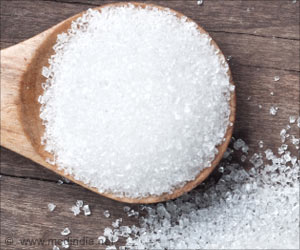
Experts at the Duke School of Medicine say that they are apparently close to discerning the secret behind the affinity between cancer cells and sugar.
They say that their research may be useful for scientists in charting a mechanism that may lead to better cancer treatments.Working under the guidance of Assistant Professor Jeffrey Rathmell in the Duke Department of Pharmacology and Cancer Biology, graduate student Jonathan Coloff found that the tumour cells use glucose sugar as a way to avoid programmed cell death.
While making a presentation at the American Association of Cancer Research Annual Meeting in San Diego on Tuesday, the researchers said that lab experiments showed that tumour cells make use of a protein called Akt to promote glucose metabolism, which in turn regulates a family of proteins critical for cell survival.
In normal cells, the removal of growth factors that regulate metabolism and cell survival leads to loss of glucose uptake and metabolism and cell death.
However, cancer cells maintain glucose metabolism and resist cell death, even when deprived of growth factors.
Coloff and his colleagues studied how Akt might affect these processes.
Advertisement
The mutant form of Akt allowed cells to maintain glucose usage, and survive even when no growth factors were present, allowing them to bypass a normal safeguard used by cells to prevent cancer development.
Advertisement
However, they added, the cancer-causing version of Akt prevents the two proteins from accomplishing that tasks, allowing the cell to survive when it should not.
The team also observed that the withdrawal of glucose from the environment rendered Akt unable to maintain regulation of the key targeted proteins Mcl-1 and Puma, and the cells died.
"Akt's dependence on glucose to provide an anti-cell-death signal could be a sign of metabolic addiction to glucose in cancer cells, and could give us a new avenue for a metabolic treatment of cancer," said Dr. Rathmell, in whose lab the experiments were conducted.
Source-ANI
SRM/K