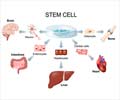
In a breakthrough study, researchers have developed a new stem cell therapy that may help in treating hearing impairment.
Deafness typically involves the loss of sensory receptors, called hair cells, for their "tufts" of hair-like protrusions, and their associated neurons.
Presbycusis (Age-related Hearing Loss)-Causes-Symptoms-Diagnosis-Treatment-FAQs
Presbycusis (age related hearing loss) is the gradual loss of hearing that occurs as people get older. Presbycusis involves progressive sensorineural hearing loss.
Presbycusis (age related hearing loss) is the gradual loss of hearing that occurs as people get older. Presbycusis involves progressive sensorineural hearing loss.
The researchers carefully dissected and cultured cochlear cells from 9-11 week-old human fetuses.
They then expanded the cells and maintained in vitro for up to one year, with continued division for the first 7 to 8 months and up to 30 population doublings, which is similar to other non-embryonic stem cell populations, such as bone marrow.

Anatomy of Ear and Hearing
Ear converts sound waves into electrical impulses that are transmitted to the temporal lobe of the brain through the auditory nerve. It consists of outer, inner and middle sections.
Ear converts sound waves into electrical impulses that are transmitted to the temporal lobe of the brain through the auditory nerve. It consists of outer, inner and middle sections.
The researchers could formulate conditions that allowed for the progressive differentiation into neurons and hair cells with the same functional electrophysiological characteristics as cells seen in vivo.
Advertisement

Stem Cell Therapy Currently Used
Encyclopedia section of medindia explains in brief about the stem cell therapies currently used
Encyclopedia section of medindia explains in brief about the stem cell therapies currently used
Although the hair cell-like cells did not show the typical formation of a hair bundle, the authors suggest that future studies will aim to improve the differentiation system.
Advertisement

New Gene Therapy may Harbour Deafness Cure
An Oregon Health and Science University Stanford University neurobiologist in Portland, who is profoundly hard of hearing, has come up with a gene therapy may one day help cure hearing loss.
An Oregon Health and Science University Stanford University neurobiologist in Portland, who is profoundly hard of hearing, has come up with a gene therapy may one day help cure hearing loss.
"Although considerable information has been obtained about the embryology of the ear using animal models, the lack of a human system has impaired the validation of such information," noted the authors.
Dr Ralph Holme, director of biomedical research for Royal National Institute for Deaf and Hard of Hearing People, said: "There are currently no treatments to restore permanent hearing loss so this has the potential to make a difference to millions of deaf people."
The study is published in the April issue of Stem Cells.
Source-ANI
SRM