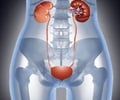
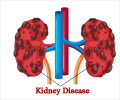
An article in the Sept. 27 issue of the journal Transplantation has revealed that kidney transplant specialists at Cedars-Sinai Medical Center have developed innovative laboratory techniques to improve opportunities and success rates for kidney transplant candidates who are at high risk of organ rejection because of previous exposure to donor antigens.
Tissue compatibility issues exist for all patients receiving transplanted organs but rejection risk is much greater in those with high exposure to “non-self” human leukocyte antigens (HLAs). Exposure may come through blood transfusions, previous transplantation or even pregnancy, when the mother is exposed to the father’s antigens expressed in the cells of the developing baby. The immune system is then “sensitized” to those antigens, developing antibodies to fend them off even if the antigens arrive in the form of a potentially life-saving donated organ.
About Transplantation
Since the early times, the novel idea of transplanting tissues and other body parts from one organism to the other has captured the imagination of successive generations.
Since the early times, the novel idea of transplanting tissues and other body parts from one organism to the other has captured the imagination of successive generations.
Jordan and his colleagues also developed laboratory protocols using antigens and patient blood that were useful in predicting which patients were most likely to benefit from desensitization. Now they have adopted new technology – solid phase assays – that uses beads coated with specific HLA antigens to much more precisely determine the specificity and strength of a patient’s antibodies.
“With solid phase assays, we can tell the physician that a patient has antibody to a particular antigen because it bound to a specific bead. This allows us to do a more quantitative analysis and predict more accurately which patients are the best candidates to have a successful transplant with a low risk of acute rejection. We also can predict which patients are at very high risk for acute rejection. The physicians can then preemptively treat patients before they go through a full-blown acute rejection episode, which is a risk factor for chronic rejection,” said Nancy L. Reinsmoen, Ph.D., director of Cedars-Sinai’s HLA Laboratory and first author of the article.

Liver Transplantation - Facts, Contraindications, Procedure, Follow up, Complications & Prognosis
Liver transplantation is a surgical option for the treatment of liver failure where the diseased liver is replaced with a healthy one.
Liver transplantation is a surgical option for the treatment of liver failure where the diseased liver is replaced with a healthy one.
More than 70,000 patients with end-stage renal disease are on transplant wait lists in the United States but fewer than 18,000 kidney transplants are performed each year, in part because about one-third of kidney failure patients have high “anti-donor” antibody levels and few centers specialize in desensitization therapy. Many potential candidates are told that a transplant is not possible even if a potential donor’s tissue and blood types otherwise match perfectly because their hyper-vigilant immune systems would reject organs from the majority of the population.
Advertisement

Bone Marrow Transplantation
Animation and slides providing graphic explanation of Bone Marrow Transplantation (BMT)/Stem Cell Transplantation that is done for leukemia and other blood-related disorders.
Animation and slides providing graphic explanation of Bone Marrow Transplantation (BMT)/Stem Cell Transplantation that is done for leukemia and other blood-related disorders.
“The new monitoring techniques developed by Dr. Reinsmoen and her laboratory team at Cedars-Sinai have greatly improved our ability to predict patients at risk for rejection before the transplant is done,” said Jordan.
Advertisement

Medical Tourism ? The Road Ahead
Medical Tourism has become a serious enterprise in India over the last two years. However some hospitals have been practicing it for quite a few years.
Medical Tourism has become a serious enterprise in India over the last two years. However some hospitals have been practicing it for quite a few years.
Source-Newswise
RAS/SK