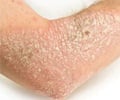
A new study for determining the genetic basis of psoriasis was conducted by researchers at Washington University School of Medicine in St. Louis. The study found seven new sites of common DNA variation, which can increase the risk of developing this condition.
The study, led by Anne Bowcock, Ph.D., professor of genetics at the School of Medicine, also cited that variations in one genetic region link psoriasis and a related joint disorder, psoriatic arthritis, to four autoimmune diseases: type 1 diabetes, Grave's disease, celiac disease and rheumatoid arthritis."Common diseases like psoriasis are incredibly complex at the genetic level. Our research shows that small but common DNA differences are important in the development of psoriasis. Although each variation makes only a small contribution to the disease, patients usually have a number of different genetic variations that increases their risk of psoriasis and psoriatic arthritis," said Bowcock.
She said that these DNA variations indicate different biological pathways leading to psoriasis and may even help in developing new-targeted drugs and treatments aiming at specific pathways.
Psoriasis is an autoimmune disease that occurs when the body's immune cells mistakenly attack the skin and is characterized by red, scaly patches that can be itchy, painful or both. Many psoriatic patients develop psoriatic arthritis, a condition that is often unbearably painful and debilitating.
In the study, the researchers mainly focused on points of common variation in the genome called single nucleotide polymorphisms, or SNPs, a number of them exclusive to an individual and have a crucial role in a person's predisposition to disease or good health. They used an approach called whole genome association for scanning over 300,000 SNPs in the genomes of 223 psoriasis patients, including 91 having psoriatic arthritis.
They found seven novel DNA variations linked to psoriasis and confirmed four other previously identified variations to be associated with the disease.
Advertisement
"Although this region has been known to play a major role in psoriasis, DNA variations in the MHC alone have been known to not be enough to trigger disease. Only 10 percent of patients with variations in the major histocompatibility complex developed psoriasis. This tells us that other genetic or environmental factors also contribute to the disease," said Bowcock.
Advertisement
Particularly, DNA variations on chromosome 4 were strongly linked to psoriatic arthritis. These same variations were also associated with psoriasis and were earlier linked to type 1 diabetes, rheumatoid arthritis, Grave's disease (caused by an overproductive thyroid gland) and celiac disease (caused by the inability to digest gluten).
The same region of chromosome 4 contains genes that code for the signalling molecules IL2 and IL21, paving the way for finding out if existing drugs that block either molecule may be effective in some psoriasis patients, especially those with psoriatic arthritis.
The researchers also found significant DNA variations on chromosome 13 in a genetic region involved in modifying proteins, and on chromosome 15, in a region responsible for producing a protein that activates TNF alpha (tumor necrosis factor-alpha) in a specialized immune cell known as a dendritic cell. While TNF alpha normally helps fight infections, it is thought to be a major player in psoriasis and psoriatic arthritis. A number of FDA-approved psoriasis medications act by binding to TNF-alpha, and that's how they prevent it from communicating with cells.
"The goal of this study and other genome-association studies is to get to personalized medicine, where you can diagnose a disease and ask what genetic risk factors this person has that points to altered pathways. Then, we can target those pathways for specific therapeutic interventions," said Bowcock.
The results of the study appear in the latest issue of the open-access journal PLoS Genetics.
Source-ANI
RAS/L