A team of Dana-Farber Cancer Institute scientists has discovered a compound capable of halting a common type of drug-resistant lung cancer thanks to the ability to make, test, and map the atomic structure of new anti-cancer agents.
In a study to be published in the December 24/31 issue of the journal Nature, the researchers report that non-small cell lung cancers that had become invulnerable to the drugs Iressaâ and Tarcevaâ were stymied by a compound designed and formulated in a Dana-Farber lab. The compound, whose basic chemical framework is different from that of other cancer drugs, acts against a protein – known as an epidermal growth factor receptor (EGFR) kinase – that carries a specific structural defect.
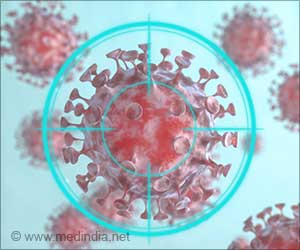
Lung Cancer - Types, Causes, Symptoms, Diagnosis, Treatment and Prevention
Lung cancer is a malignant tumor in the lung tissues. Smoking is the main cause of lung cancer with symptoms like recurrent respiratory diseases.
Lung cancer is a malignant tumor in the lung tissues. Smoking is the main cause of lung cancer with symptoms like recurrent respiratory diseases.
The study also illustrates how rapidly lung cancer research and treatment are advancing. It was less than five years ago that investigators at Dana-Farber and elsewhere traced some non-small cell lung cancers (NSCLCs) to mutations in the EGFR gene and discovered that Iressa and Tarceva slowed such tumors' growth by targeting the abnormal EGFR protein. While the discovery has extended the lives of thousands of NSCLC patients around the world, EGFR blockers are only temporarily effective: after about eight months of treatment, the tumors begin to grow back. And because the drugs target normal EGFR protein as well as abnormal, many patients have severe side effects such as skin rashes and diarrhea.
All current EGFR inhibitors have a structural "backbone" known as a quinazoline core. They lodge in a notch on EGFR normally reserved for a molecule known as ATP, which delivers chemical energy to the cell. By blocking ATP from binding to EGFR, the inhibitors prevent EGFR from sending signals that are essential to keep the tumor cells growing.
Lung Biopsy - Indications - Procedures - Risks - FAQs - Reference
The procedure by which tissue samples are obtained from the lung is known as lung biopsy. The biopsy tissues obtained from the lungs are examined by a pathologist.
The procedure by which tissue samples are obtained from the lung is known as lung biopsy. The biopsy tissues obtained from the lungs are examined by a pathologist.
Dana-Farber investigators hypothesized that current agents lose their potency because they don't bind as tightly or fully to the EGFR T790M protein as they ideally should. To improve the fit, researchers led by chemical biologist Nathanael Gray, PhD, prepared a group of inhibitors with a different structural scaffold, known as a pyrimidine core, which, it was thought, would mesh more thoroughly. They lab-tested the agents in NSCLC cells with EGFR T90M and found several that were up to 100 times more potent than quinazolines in restricting cell growth. As an unexpected bonus, these compounds were nearly 100 times less powerful at slowing the growth of cells with normal EGFR, suggesting they would be less likely to produce side effects than current drugs. The agent which performed the best is the pyrimidine WZ4002.
Advertisement

Congenital Cystic Adenomatoid Malformation Of The Lung
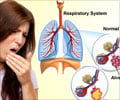
Congenital disease of the lung in which multiple cysts (water bubbles) develop in the lung tissues, sometimes affecting a whole lobe of the lungs.
Congenital disease of the lung in which multiple cysts (water bubbles) develop in the lung tissues, sometimes affecting a whole lobe of the lungs.
In follow-up experiments, Dana-Farber and BWH's Kwok-Kin Wong, MD, PhD, screened the pyrimidine agents in mice with Iressa- and Tarceva-resistant NSCLC tumors driven by EGFR T790M, and found them to be highly effective at impeding tumor growth. Dana-Farber's Michael Eck, MD, PhD, conducted crystallography studies to determine the molecular structure of the pyrimidines, providing a better picture of why they are so potent and how they target EGFR T790M cells so precisely.
Advertisement

Mesothelioma
Animation on mesothelioma - a form of lung cancer, that explains about the condition, its risk factors, diagnosis and treatment
Animation on mesothelioma - a form of lung cancer, that explains about the condition, its risk factors, diagnosis and treatment
Much work remains to determine if WZ4002 and its chemical cousins will be effective therapies, the authors caution, but the discovery demonstrates the power of screening specially designed compounds against cancers with certain genetic quirks.
"Obviously these are very early days with respect to the possible use of these compounds in patients – we still have much to learn about their possible liabilities," Eck remarks. "But I am optimistic that our approach is correct and that it will lead to an effective treatment for the thousands of non-small cell lung cancer patients worldwide who development resistance to Iressa and Tarceva every year."
Source-Eurekalert
RAS