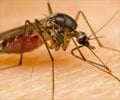
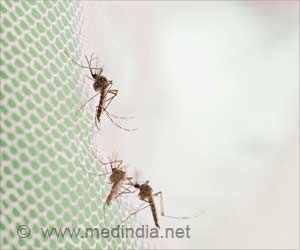
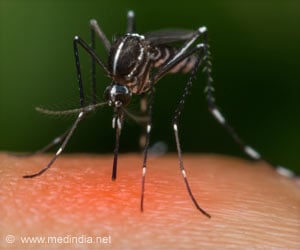
While governments around the world are adopting various mosquito-controlling measures to fight dengue, a large-scale survey in Thailand has revealed that fewer mosquitoes may increase the prevalence of the deadliest form of the disease.
Yoshiro Nagao and colleagues at the London School of Hygiene and Tropical Medicine say that dengue, which is also known as "breakbone fever", is generally not fatal for the first time around.
Dengue and Dengue Hemorrhagic Fever
Encyclopedia section of medindia gives general information about Dengue and Dengue Hemorrhagic Fever
Encyclopedia section of medindia gives general information about Dengue and Dengue Hemorrhagic Fever
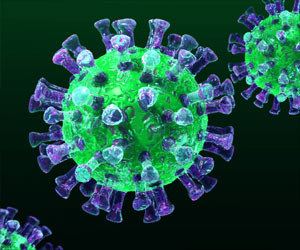
According to them, there are four varieties of infection, which are scientifically known as serotypes.
The researchers say if a person is bitten by a mosquito carrying serotype A and then a year later by one carrying serotype B, the antibodies made in response to virus A would bind to the virus B but not destroy it.
Insect Bites and Stings - First Aid and Emergency Treatment Guide
A quick and simple First Aid guide on how to administer treatment for Insect Bites and Stings.
A quick and simple First Aid guide on how to administer treatment for Insect Bites and Stings.
Nagao says that for a few weeks after a person contracts dengue, one has a kind of immunity that destroys other serotypes.
Advertisement
Dengue and Dengue Fever - Symptoms, Causes, Diagnosis, Treatment & Prevention
Dengue is a tropical disease caused by mosquitoes carrying the dengue virus. Symptoms include fever, joint & muscle ache, fatigue, nausea and skin rash.
Dengue is a tropical disease caused by mosquitoes carrying the dengue virus. Symptoms include fever, joint & muscle ache, fatigue, nausea and skin rash.
The researcher says that if a person gets infected by all the serotypes during the period of cross-immunity, he/she will develop antibodies to all of them.
Advertisement

The researchers add that fewer mosquitoes would lessen the frequency of infections, and people would be less likely to catch another serotype during the crucial window.
All that goes to indicate that fewer mosquitoes could result in more cases of DHF say the researchers.
The researcher tested their hypothesis by combining the incidence of DHF in Thailand with a huge Thai survey that sampled water containers in a million homes across the country, from 2002 to 2004, looking for larvae of the dengue-carrying Aedes mosquito.
They found that as mosquito infection rates climbed towards 30 per cent of houses, DHF cases also increased.
However, once over the 30 per cent mark, the relationship was reversed, and DHF cases dropped off as infection rates climbed.
The researchers said that 70 per cent of homes in some villages had Aedes larvae, and that a mathematical model based on the survey showed that cutting this to 30 per cent would increase DHF cases by more than 40 per cent.
They warned that infestation needed to be reduced to less than 10 per cent to reduce DHF cases, but achieving such an extensive reduction might be difficult.
Nagao says that since measures to control mosquito population, such as spraying insecticide, may increase the number of DHF cases, such measures should be "subject to ethical discussion".
However, a WHO dengue expert, Axel Kroeger, says even if this new discovery is confirmed, it is worth fighting dengue by controlling mosquitoes because some developing countries have achieved far less than 30 per cent infestation, while higher levels often reflect a neglect of mosquito control.
An article on the research has been published in the journal PLoS Neglected Tropical Diseases.
Source-ANI
TAN/M