However, WHO spokesman said beating malaria must remain the ultimate goal.
The report has pointed out, the Bill and Melinda Gates Foundation set the world such a target in 2007, an aim which was then endorsed by the WHO's Margaret Chan.
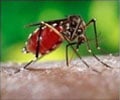
About Mosquito Diseases
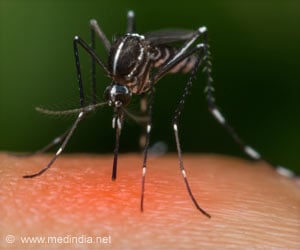
Mosquito-borne diseases, like malaria, filaria, dengue, etc are common in places conducive of mosquito breeding. Swamps, ponds and stagnated drainage provide optimal breeding ground for mosquitoes.
Mosquito-borne diseases, like malaria, filaria, dengue, etc are common in places conducive of mosquito breeding. Swamps, ponds and stagnated drainage provide optimal breeding ground for mosquitoes.
It suggested some countries, particularly in sub-Saharan Africa, may be better pursuing a policy of controlling the disease rather than one of eradication.
Advertisement

Latin America Best Placed For Eradicating Malaria
Latin America has the best chances of any malaria-affected continent of wiping out the disease, while sub-Saharan Africa has the least hope, according to a study published on Friday in The Lancet.
Latin America has the best chances of any malaria-affected continent of wiping out the disease, while sub-Saharan Africa has the least hope, according to a study published on Friday in The Lancet.
In an editorial accompanying the series, Richard Horton and Pamela Das of the Lancet, argued control may save more lives.
Advertisement
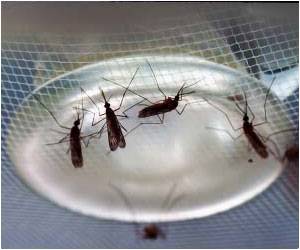
Malaria Control Turning Difficult With 'Evolving' Mosquito
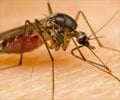
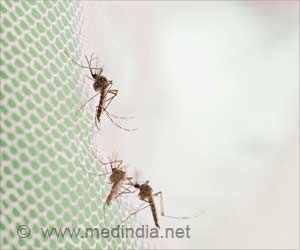
Anopheles gambiae,the malaria-transmitting mosquito species, has begun to evolve into two separate species with different characteristics,which could pose a challenge to malaria control.
Anopheles gambiae,the malaria-transmitting mosquito species, has begun to evolve into two separate species with different characteristics,which could pose a challenge to malaria control.
They also concluded "malaria will only be truly eradicable when an effective vaccine is fully available".
Responding to the report in a statement, Robert Newman, of the WHO's Global Malaria Programme, said the ultimate goal had to be eradication
"WHO has always supported - and will always continue to support - endemic countries in their efforts to control and eliminate malaria," he wrote.
"It is entirely feasible to eliminate malaria from countries and regions where the intensity of transmission is low to moderate, and where health systems are strong.
"Eliminating malaria from countries where the intensity of transmission is high and stable, such as in tropical Africa will require more potent tools and stronger health systems than are available today."
The authors pointed out that malaria and mosquitoes do not respect national borders and that both parasite and insect may develop resistance to existing drugs.
Source-ANI