Malaria Parasite Works On White Blood Cells

by Gopalan T on  November 27, 2011 at 7:12 AM Tropical Disease News
  •   Print
  •   Share
  •   Comments
  •  Text 
 Malaria Parasite Works On White Blood Cells
The malaria parasite works on the dendritic cells (DCs), warding off the body’s immune attack, say Australian researchers.

The dendritic cells are found in most tissues of the body and are particularly abundant in those that are interfaces between the external and internal environments (e.g., skin, lungs, and the lining of the gastrointestinal tract).

Dr Michelle Wykes and her team from Queensland Institute of Medical Research (QIMR) have recently published new findings demonstrating how the malaria parasite can survive in the dendritic cells in the spleen.

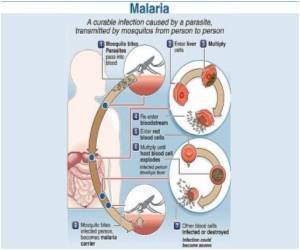
Traditionally, it was believed the parasite’s development in the body was restricted to the liver and red blood cells. But finding its incubation in the dendritic cells could pave the way for new malaria drugs and vaccines.

Dr Wykes’ research, undertaken over several years, provides a major breakthrough in our understanding of the malaria parasites.
“Our research has discovered how white blood cells called dendritic cells, malfunction and shield the malaria parasite from the body’s immune attack.

“Dendritic cells normally function like generals of an army, giving orders to the body’s immune cells to fight infection,” Dr Wykes said.

“The system usually works brilliantly. However, the problem with malaria is that the disease has found a way to block dendritic cells from doing their work, meaning that the disease over-rides our immune responses. And therefore, people get sick.”

Dr Wykes was awarded a $300,000 Queensland Government Smart State fellowship in 2010 to assist her research.

“The fellowship has enabled me to progress my research and without it I wouldn’t have been able to deliver these new findings which are a major step in fighting the global problem of malaria,” Dr Wykes said.

The findings were published in the prestigious scientific journal Proceedings of the National Academy of Sciences of the United States of America.

Malaria affects more than 200 million people worldwide, causing nearly 800,000 deaths per year, mostly young children under five.

The World Health Organisation states most deaths occur in Africa where a child dies of malaria every 45 seconds and the disease accounts for approximately 20 percent of all childhood deaths.

Australia is not immune with approximately 600 cases reported here annually, mostly people who have been travelling overseas in malaria-affected countries, with Queenslanders accounting for approximately one-third of these cases.


Source-Medindia

 Email Email   RSS Feeds RSS Feeds   Print this page Print   Save this page Save   Link Link   Syndicate Syndicate   Comments Comments   Bookmark and Share
 
Comment & Contribute
Comments should be on the topic and should not be abusive. Comments are normally moderated and are reviewed after they are posted.
* Your comment can be maximum of 2500 characters

Notify me when reply is posted
I agree to the terms and conditions
  
If you have a question about health related issues, you can now post it in our Ask An Expert section on our community website Medwonders.com and get answers from our panel of experts.
X

Medwonders Health Network

  • Health News Index
A B C D E F G H I J K L M N O P Q R S T U V W X Y Z
News Archive
Date :
Category :
Keyword :
Quiz on Malaria
Malaria is a common parasitic disease of the tropics, resulting in million deaths every year. Early detection and adequate treatment at the right time can reduce deaths due to malaria. Test your knowledge on this condition by taking this quiz.
  • News Quick Links
News Central Health Watch
Latest Health News Health In Focus
News Category (500+) Breaking Health News
Popular News Celebrating Life
Health News and Press Release Medindia - Exclusive
News Photo Gallery India Special
News Video Gallery Lifestyle and Wellness
News From Other Resources
Malaria
Complete Medindia Resources
News Categories:  
Vision Health Center

Tropical Disease Related News

» New Weapon Against Malaria » Britain At Risk of Dengue Spread Due to Climate Change
» Dengue Epidemic in Rio » Progress In Anti-Malaria Fight, WHO Applauds
» Drug-resistant Malaria in Thailand Borders can be Contained, WHO Optimistic » Malaria Resurgence and Reduction of Malaria-Control Programs, Related
» Drug-Resistant Malaria Causing `Decisive’ In Battling the Disease » Cholera Outbreak in Ghana
Read More >>