Max Bupa Health Insurance was recently in the news for announcing an expected three-fold rise in premium collection by the end of 2012.
Shefali Chhachhi, Director - Marketing, Max Bupa Health Insurance, elucidated on what works best for the common man in the health insurance sector in India.
Max Bupa Health Insurance
To inform readers about details of third standalone health insurance company in India – Max Bupa Health Insurance Company Ltd.
To inform readers about details of third standalone health insurance company in India – Max Bupa Health Insurance Company Ltd.
A. The health insurance industry in India is in a nascent stage. When compared to other markets worldwide, it is among the fastest growing sectors in the Indian non-life industry. This is because the regulatory environment and demographic scenario are rapidly changing, and healthcare needs of the people are growing.
Q. How many private players are there in health insurance?
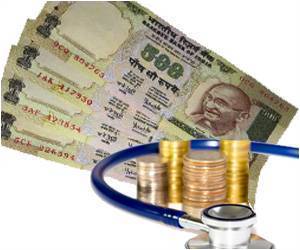
Max Bupa Health Insurance Eyes Three Fold Increase in Premium Collection by End 2012
Max Bupa Health Insurance is looking forward to booking a three-fold rise in premium collection by the end of 2012.
Max Bupa Health Insurance is looking forward to booking a three-fold rise in premium collection by the end of 2012.
Q. What are the current challenges facing the health insurance industry in India?
Advertisement

Health Insurance In India - An Overview
Health insurance has emerged one of the fastest growing segments in the non-life insurance industry with 30% growth in 2010-11 with annual premium collections being over Rs 6,000 crores.
Health insurance has emerged one of the fastest growing segments in the non-life insurance industry with 30% growth in 2010-11 with annual premium collections being over Rs 6,000 crores.
The biggest challenge, however, is the low levels of awareness about health insurance among consumers. Also, there is lack of standardization in healthcare costs and limited information about available healthcare, which leads to under-insurance or inadequate insurance coverage.
Advertisement

Health Insurance Will Cover Every Indian
The Government is planning a health insurance scheme that will cover every Indian. This public-funded scheme is likely to be introduced in the 12th Five Year Plan, starting in 2012-13.
The Government is planning a health insurance scheme that will cover every Indian. This public-funded scheme is likely to be introduced in the 12th Five Year Plan, starting in 2012-13.
There is also evidence of reactive purchase of health insurance, which could lead to a number of conditions being excluded at the time of purchase. Pre-existing conditions in India can be excluded for 4 years, after which customers need to be included in a policy as per IRDA regulations. Proactive purchase of health insurance could result in better health funding and long-term coverage for customers.
Q. What are the specific needs of the health insurance customer in India?
A. The Indian customer needs a health insurance policy designed to suit his demands and also fit his budget. The policy should guard against spiralling medical costs and guide the customer to wellness, providing double protection - of coverage and prevention. The plan should also be able to handle the whole family’s health-related needs, right from consultation and hospitalization to post-hospitalization.
Q: How does a customer make sure that he is not under-insured?
A. While most Indians do not have health insurance, it is likely that those who do have health insurance are under insured. This is mainly because people buy health insurance without accurately assessing their healthcare needs and the corresponding medical costs. However, as they say, one size does not fit everyone. An individual’s requirement of health insurance depends solely on his/her life stage, family’s needs and financial condition.
Q: How does a customer decide upon the right health insurance option?
A. Health Insurance is not just a means of taking care of healthcare needs. It also helps safeguard your savings. It does pay to know a few crucial things before committing to a health plan.
While choosing a health insurance plan, always consider the benefits before the price. It is best to take a health policy which offers maximum coverage for most major medical conditions.
When buying a policy, please understand clearly, the services you paying for. Make sure that you read the exclusions section very carefully, as many health benefits are strictly optional, and will vary from one plan to the next.
When buying a health insurance policy, always look for one that comes with assured renewability - not one which may deny you coverage based on your claims history and age.
At the time of buying the health insurance, consider the following points - flexibility in choosing the health care provider, cost of insurance premiums, cashless hospitalization facility, level of coverage offered, and the benefits excluded.
Q. Cynics say that it is difficult to actually get the benefit/claims that a customer pays for, in a medical insurance scheme. Is this true? How does removing the TPA (Third Party Administrator) help?
A. In our case it is not difficult to settle your claims. Insurance companies are typically seen as a faceless entity and the TPA is the person who deals with the customers. We want our customers to know us and therefore, we manage our relationship with them directly, not through any third parties. We manage all customer services and claims requests directly through our in-house team.
Q. How would you analyse the crisis of Medicare and Medicaid in the US? What are its learnings, if any, for the health insurance industry worldwide?
A. With increasing medical costs in the US, the burden on both private insurance funding and government funded healthcare has increased. What we see now is the result of an ongoing crisis, which has been increasing in magnitude over a period of time.
Factors like unsustainable spending growth, enormous crowding-out of private coverage, perverse incentives that discourage work and financial planning, and cost control mechanisms like low provider payment rates that limit access for enrollees and contribute to a low quality of care have left Medicaid in a state of crisis.
One of the key learnings for all health insurers would be that they need to adopt a long-term outlook for cost management. For example, preventative healthcare helps manage healthcare costs better and it is important for health insurers to consider helping their customers improve their health.
While it may initially look like a large investment, in the medium and long term, this will definitely lead to improved cost efficiency.
Q. Which nation or nations, do you think is following the best health insurance practice for its people?
A. Health insurance has a varied level of acceptance across different countries. Is there any country in the world where 100% of the population has health insurance cover? The answer is ‘no’.
But many initiatives have been launched in a number of developed countries - a combination of private health insurance and government-sponsored healthcare. For example, the UK has the NHS (National Health Service).
In Australia and some European countries, health insurance is well understood concept and is accepted by citizens. This helps people better manage their health care expenses.
Source-Medindia