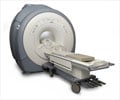
Researchers at Canada's largest children's rehabilitation hospital have developed a technique that uses infrared light brain imaging to decode preference – with the goal of ultimately opening the world of choice to children who can't speak or move.
In a study published this month in The Journal of Neural Engineering, Bloorview scientists demonstrate the ability to decode a person's preference for one of two drinks with 80 per cent accuracy by measuring the intensity of near-infrared light absorbed in brain tissue.
Types of Physiotherapy - Infra-red Rays
Infrared physiotherapy uses infrared rays, where electromagnetic waves help treat musculoskeletal pain including joint pain, muscle spasm, etc.
Infrared physiotherapy uses infrared rays, where electromagnetic waves help treat musculoskeletal pain including joint pain, muscle spasm, etc.
Most brain-computer interfaces designed to read thoughts require training. For example, in order to indicate yes to a question, the person needs to do an unrelated mental task – such as singing a song in their head.
The nine adults in Luu's study received no training. Prior to the study they rated eight drinks on a scale of one to five.

Brilliant Human Brain
The most amazing and complex organ in the entire universe, the human brain continues to remain an enigma.
The most amazing and complex organ in the entire universe, the human brain continues to remain an enigma.
After teaching the computer to recognize the unique pattern of brain activity associated with preference for each subject, the researchers accurately predicted which drink the participants liked best 80 per cent of the time.
Advertisement

Brain Activity Patterns Linked To Mental Preparations
Studies have showed that there are different patterns of brain activity before people solve problems, either in a sudden flash of thought or in a mathodical way
Studies have showed that there are different patterns of brain activity before people solve problems, either in a sudden flash of thought or in a mathodical way
In future, Luu envisions creating a portable, near-infrared sensor that rests on the forehead and relies on wireless technology, opening up the world of choice to children who can't speak or move.
Advertisement

Touch-screens That can Sense Hand Movements
Scientists at Microsoft Corporation’s lab in the UK have developed a prototype interactive touch-screen that can see and recognize one’s hand movements and anything near its surface.
Scientists at Microsoft Corporation’s lab in the UK have developed a prototype interactive touch-screen that can see and recognize one’s hand movements and anything near its surface.
Luu notes that the brain is too complex to ever allow decoding of a person's random thoughts. "However, if we limit the context – limit the question and available answers, as we have with predicting preference – then mind-reading becomes possible."
Source-Eurekalert
SRM