Sleep Disorders in Children - Overview, Types, Diagnosis, Management
Sleep disorders are problems in sleep that meet diagnostic criteria for a disorder. They include insomnia, obstructive sleep apnea, parasomnias and narcolepsy.
Sleep disorders are problems in sleep that meet diagnostic criteria for a disorder. They include insomnia, obstructive sleep apnea, parasomnias and narcolepsy.
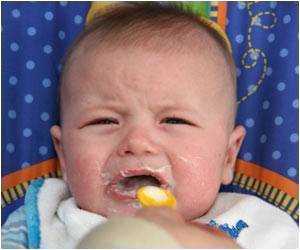
While most infant formulas are cow's milk-based, other choices include soy-based and protein hydrolysate-based formulas. Protein hydrolysate formulas contain pre-digested proteins and typically are fed to infants who cannot tolerate the intact proteins in other formulas.
In adults, pre-digested proteins are believed to act in the intestine to initiate the end of a meal, thus leading to smaller meals and intake of fewer calories. Based on this, the authors hypothesized that infants who were feeding protein hydrolysate formulas would eat less and have an altered growth pattern relative to infants feeding cow's milk-based formula.
In the study, published online in the journal Pediatrics, infants whose parents had already decided to bottle-feed were randomly assigned at two weeks of age to feed either a cow's milk-based formula (35 infants) or a protein hydrolysate formula (24 infants) for seven months.
Both formulas contained the same amount of calories, but the hydrolysate formula had more protein, including greater amounts of small peptides and free amino acids.
Advertisement

Child-Pyloric stenosis
Pyloric stenosis in a child is narrowing of the pylorus due to which the milk cannot pass into the small intestine.
Pyloric stenosis in a child is narrowing of the pylorus due to which the milk cannot pass into the small intestine.
Over the seven months of the study, the protein hydrolysate infants gained weight at a slower rate than infants fed cow milk formula. Linear growth, or length, did not differ between the two groups, demonstrating that the differences in growth were specifically attributable to weight.
Advertisement

Childhood Obesity - Criteria - Causes - Complications, Treatment
Childhood obesity is one of the most serious health challenges in the developing countries and needs to be understood and tackled effectively.
Childhood obesity is one of the most serious health challenges in the developing countries and needs to be understood and tackled effectively.
When the data were compared to national norms for breast-fed infants, the rate of weight gain of protein hydrolysate infants was comparable to the breast milk standards; in contrast, infants fed cow's milk formula gained weight at a greater rate than the same breast milk standards.
Analysis of the laboratory meal revealed the infants fed the protein hydrolysate formula consumed less formula during the meal.
"One of the reasons the protein hydrolysate infants had similar growth patterns to breast-fed infants, who are the gold standard, is that they consumed less formula during a feed as compared to infants fed cow's milk formula" said Mennella. "The next question to ask is: Why do infants on cow's milk formula overfeed?"
The findings highlight the need to understand the long-term influences of infant formula composition on feeding behavior, growth, and metabolic health. Future studies will utilize measures of energy metabolism and expenditure to examine how the individual formulas influence growth, and how each differs from breastfeeding.
Source-Eurekalert