An Australian study on the impact of climate change on dengue fever could throw light on the mosquito-borne disease and perhaps pave the way for better control of the problem.
Researchers from the School of Public Health in the Queensland University of Technology (QUT) are examining the relationship between climate change and the incidence of dengue in the northern Queensland city of Townsville and the capital of Bangladesh, Dhaka, combined with their rapid socio-environmental changes.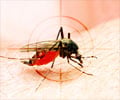
Dengue and Dengue Fever - Symptoms, Causes, Diagnosis, Treatment & Prevention
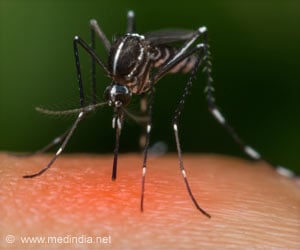
Dengue is a tropical disease caused by mosquitoes carrying the dengue virus. Symptoms include fever, joint & muscle ache, fatigue, nausea and skin rash.
Dengue is a tropical disease caused by mosquitoes carrying the dengue virus. Symptoms include fever, joint & muscle ache, fatigue, nausea and skin rash.
Ms Banu said the research would build on existing knowledge that climate variability could influence the growth of the dengue virus and mosquito numbers, as well as people's behaviour.
"The number of mosquitoes usually increases after rainfall because they breed in containers that hold water," she said.

Ms Banu said the QUT research team would measure the variation that rainfall, humidity and temperature could cause in dengue incidence.
Advertisement

New Strain of Dengue Fever Emerges in Queensland, Deaths Likely
New strain of dengue fever emerges in Queensland and deaths are likely now, it is feared.
New strain of dengue fever emerges in Queensland and deaths are likely now, it is feared.
"If we can do this, we can then establish a forecasting model that can be used to reduce dengue through mosquito control."
Advertisement
According to Queensland Health, north Queensland in the wet season of 2008-09 had 1025 locally-acquired confirmed dengue cases, the biggest epidemic in at least 50 years.
Source-Medindia
GPL