A new genetic variant which affects susceptibility to tuberculosis and leprosy has been identifed in a study into why some people are more resistant than others to these diseases.
The findings, published today in the journal Cell, may have implications for future treatments for the two conditions.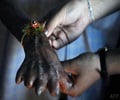
Leprosy / Hansen's Disease - History
Leprosy, caused by Mycobacterium leprae, affects any organ like skin, eyes, mucosa, periphery nerves or any other organ. It can cause irreversible disfigurement of the extremities and nerve damage.
Leprosy, caused by Mycobacterium leprae, affects any organ like skin, eyes, mucosa, periphery nerves or any other organ. It can cause irreversible disfigurement of the extremities and nerve damage.
Our immune system uses two broad strategies to defend us from infection: innate immunity and adaptive immunity. Innate immunity is the immune response that we are born with; it is the first line of defence, swift, but more generalised than adaptive immunity. The latter strategy enables the immune system to adapt its response to infection in order to better target itself towards specific invading pathogens.
To investigate how mycobacteria cause disease – and what protects some people but not others – researchers at the University of Washington in Seattle, together with researchers from the Wellcome Trust's South East Asia programme in Vietnam, studied zebrafish. As with mammals, the zebrafish relies on adaptive immunity – the immune response which 'learns' from invading pathogens – for maximal control of mycobacterial infection. The zebrafish's transparent larvae allow researchers to see how its innate immune response behaves before the adaptive immunity has chance to learn to recognise a pathogen.
Psoriasis About
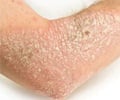
Psoriasis is a recurrent and complex inflammatory skin disorder that can have tremendous physical and psychological impact on the sufferer
Psoriasis is a recurrent and complex inflammatory skin disorder that can have tremendous physical and psychological impact on the sufferer
The researchers then turned their attention to case-control studies – comparisons of patients ('cases') against healthy volunteers ('controls') – to see whether genetic variants in the LTA4H region affected susceptibility to mycobacterial infection in humans, examining patients in Vietnam with a particularly dangerous form of TB known as meningeal TB, and patients in Nepal with leprosy.
Advertisement

Nepal Finally Rids Itself Of Leprosy
Leprosy has been eliminated in Nepal, one of the last countries to rid itself of the disease, the government announced Wednesday.
Leprosy has been eliminated in Nepal, one of the last countries to rid itself of the disease, the government announced Wednesday.
Effective treatment for TB has been available for over 50 years, however patients face 6 month long treatment schedules with numerous, potentially toxic drugs. Combating the global burden of TB will rely on new and improved drugs and findings such as these reveal new opportunities for drug development.
Advertisement
Leprosy Susceptibility Genes Reported in Major Study
A major study identified seven genes that increase an individual's susceptibility to leprosy.
A major study identified seven genes that increase an individual's susceptibility to leprosy.
Source-Eurekalert
RAS