An international team of scientists have discovered two genetic variants that could increase the risk of multiple sclerosis (MS). The genes could also reveal links to other autoimmune diseases.
The study was published 15 June in the prestigious scientific journal Nature Genetics.
World Multiple Sclerosis Day - 2009
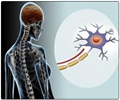
Multiple sclerosis is a serious neurological disease that can debilitate a person for life
Multiple sclerosis is a serious neurological disease that can debilitate a person for life
“One of the two genes is most likely a gene which controls metabolism of vitamin D,” Professor Brown said.
“Previous research has already shown that levels of vitamin D influence the risk of people contracting MS.
“For example, people have a higher risk the further they live from the Equator.
“This instantly suggests that a possible preventative treatment for MS is vitamin D.
Advertisement

Interaction Between Multiple Sclerosis Suceptibility Gene and Vitamin D Deficiency Impacts Risk of MS
Scientists have indicated that a link between Vitamin D deficiency and the Multiple sclerosis suceptibility gene could impact the risk of developing multiple sclerosis (MS).
Scientists have indicated that a link between Vitamin D deficiency and the Multiple sclerosis suceptibility gene could impact the risk of developing multiple sclerosis (MS).
Associate Professor Simon Broadley, senior staff specialist in neurology at the Gold Coast Hospital and Acting Head of Medicine at Griffith University, said the gradual physical deterioration associated with MS severely limits social and employment opportunities for those affected.
Advertisement
“I am very optimistic that this advance in our understanding of the genes involved in MS will eventually lead to more effective treatments. The next step in the research is to pinpoint the exact genetic mutations and the functional differences they are responsible for.”
Together with over 40 investigators from 11 institutions within the Australian and New Zealand Multiple Sclerosis Genetics (ANZgene) consortium, the team investigated genes that increase a person's risk of developing MS.
MS affects some 2.5 million people worldwide and almost 20,000 in Australia. It is a devastating autoimmune disease as it occurs at the prime of life and mostly in young Caucasian women.
The three-year study involved scanning the DNA of 1,618 people with MS and 3,413 people without MS.
Professor Brown's group was instrumental in performing the genome-wide screening process which allows the entire human genome to be scanned in broad brushstrokes.
Researchers were looking at genetic landmarks in the genome called SNPs and then progressively narrowing down their search to individual genes.
After comparing over 300,000 SNPs, two genetic regions on chromosome 12 and 20 showed significant differences.
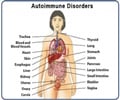
Changes in the region on chromosome 12 were discovered to coincide with an increased susceptibility to type I diabetes and rheumatoid arthritis, whereas the region identified on chromosome 20 also coincides with susceptibility to rheumatoid arthritis and Graves' disease.
In addition, chromosome 12 encodes the enzyme that converts vitamin D, which we obtain mainly through sunlight, but also our diet, into an active form that our body can use.
“It is the first such large scale human genetics project done completely in Australasia and so is a real milestone for the Australian scientific community,” Professor Brown said.
He said it also highlighted the potential of genetics research to make really major breakthroughs in understanding what causes common diseases like MS.
The research was coordinated by Professor Trevor Kilpatrick, Director of the Centre for Neuroscience at the University of Melbourne, and Dr Justin Rubio, Senior Research Fellow of the Florey Neuroscience Institutes based in Melbourne.
The research has been funded in part by MS Research Australia, The National Health & Medical Research Council and the Australian Research Council.
Source-Medindia
GPL/L