Head Injury | Brain Injury Overview Types Causes Symptoms Diagnosis Treatment
Head injury or traumatic brain injury is a leading cause of disability among children and young adults that leads to varying degrees of physical and mental stability. Fortunately, it is also one of the preventable brain disorder.
Head injury or traumatic brain injury is a leading cause of disability among children and young adults that leads to varying degrees of physical and mental stability. Fortunately, it is also one of the preventable brain disorder.
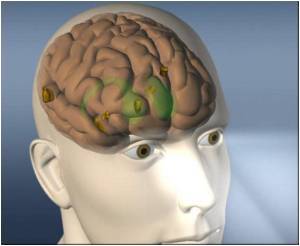
"It seems that our capacity for complex, life-and-death decisions depends on brain structures that originally evolved for making more basic, self-interested decisions about things like obtaining calories," says Shenhav, a doctoral student in psychology at Harvard. "Many of the brain regions we find to be active in major moral decisions have been shown to perform similar functions when people and animals make commonplace decisions about ordinary goods such as money and food."
Some researchers have argued that moral judgments are produced by a "moral faculty" in the brain, but Shenhav and Greene's work indicates that at least some moral decisions rely on general mechanisms also used by the brain in evaluating other kinds of choices.

About Brain Tumor
Brain tumors are the abnormal growth of brain cells that may be benign or metastatic. Brain tumors account for about 2.4% of all the tumor diagnosesandare most challenging due to their critically delicate location.
Brain tumors are the abnormal growth of brain cells that may be benign or metastatic. Brain tumors account for about 2.4% of all the tumor diagnosesandare most challenging due to their critically delicate location.
Using real-time brain imaging, Shenhav and Greene presented 34 subjects with hypothetical choices between saving one life with certainty or saving several lives, but with no guarantee that this latter effort will succeed. The experiment systematically varied the number of lives at risk and the odds of success.
Advertisement

Brilliant Human Brain
The most amazing and complex organ in the entire universe, the human brain continues to remain an enigma.
The most amazing and complex organ in the entire universe, the human brain continues to remain an enigma.
The work advances our understanding of how people make decisions affecting the lives of others. Many of the most consequential such decisions are made by policymakers: In some cases, a single choice can impact thousands of lives.
Advertisement

Understanding Brain Death
Interactive section of Medindia helps us in better understanding of Brain Death
Interactive section of Medindia helps us in better understanding of Brain Death
Truman's historic decision shows parallels to ones made by ordinary people every day. It involved trade-offs among outcomes of different magnitude: How many lives would be lost? How many saved? Second, Truman's decision was made under uncertainty. He could, at best, assign probabilities to possible outcomes.
Likewise, ordinary decision-makers must compare the relative sizes of costs and benefits, as when a car buyer balances the cost of a warranty against the cost of repairs. The consumer doesn't know at the outset whether she will have to pay for expensive repairs down the road.
"Truman, like ordinary decision-makers, had to put information about probability and magnitude together to reach a decision," Shenhav says. "And like the car buyer, Truman likely relied on his ventromedial prefrontal cortex to evaluate his options."
Source-Eurekalert