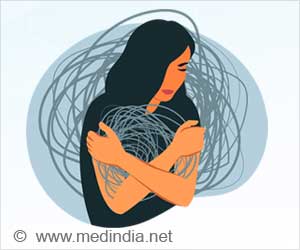

About Schizophrenia
Schizophrenia is a mental disorder characterized by symptoms of thought, behavior and social problems.
Schizophrenia is a mental disorder characterized by symptoms of thought, behavior and social problems.
Exciting findings in other areas of psychiatry have motivated researchers to turn their attention to better understanding the complex ways in which genetic factors interact with non-genetic factors to produce psychosis.
Conceptualised in a model, gene-environment interaction proposes that genes influencing risk for schizophrenia may not do so directly (the dominant model until recently), but indirectly by making individuals more sensitive to the effects of causal environmental risk factors.

Brain Depression
Interactive section of Medindia provides information about chemistry of Brain depression
Interactive section of Medindia provides information about chemistry of Brain depression
In this approach, research is focussing on subclinical symptoms that can be traced to prior persistence of clinically relevant symptoms.
Advertisement

Top 10 Amazing Brain Facts
The brain is the most amazing and complex organ in this universe and has billions of nerve cells called as neurons. Medindia brings to you the top 10 amazing brain facts.
The brain is the most amazing and complex organ in this universe and has billions of nerve cells called as neurons. Medindia brings to you the top 10 amazing brain facts.
According to findings from epidemiological research, the following environmental risk factors have significant impact on children and adolescents growing up in European societies.
Advertisement

Clinical Trials | Drug Trials - Types Protocol Development and Approval FAQs
Clinical trials are experiments that yield useful information to clinicians if a particular treatment is of any value to a patient.
Clinical trials are experiments that yield useful information to clinicians if a particular treatment is of any value to a patient.
2. Migration: Migration presents an increasing challenge to European countries. In immigrant populations the risk of developing psychotic disorders is much higher compared to the risk in both the host country and the country of origin.
3. Cannabis use: Although its effects were considered to be harmless compared to other drugs until recently, many studies have shown that cannabis use, in particular heavy use during adolescence, increases the risk of psychotic disorders such as schizophrenia.
4. Childhood victimisation: The study pointing to a link between childhood trauma and psychotic disorders is remarkably consistent in showing strong effects on disease vulnerability.
Now for the first time in the European Union a rational strategy of focused research collaboration has been devised with a unique, large-scale project, which aims to unravel the causes of schizophrenia and related psychotic disorders.
This multidisciplinary project is designed to focus on the effects of gene-environment interactions on brain pathways and psychological vulnerability, and to elucidate how subtle, but measurable, behavioural expressions of vulnerability for psychotic disorder are mediated by cerebral and psychological pathways.
The current model of gene-environment interaction is nurturing promising approaches to understand the symptoms of schizophrenia and related psychotic disorders and improve treatment.
Source-ANI