
About Genetic Testing
Genetic testing helps to confirm a genetic condition in an individual and involves q complex laboratory techniques
Genetic testing helps to confirm a genetic condition in an individual and involves q complex laboratory techniques
The study results demonstrate that is possible to identify those individuals with a regular smoking history most likely to develop lung cancer – before symptoms emerge – and prioritize them for closer medical attention, including low-dose CT screening, a technology that can find cancers early enough to cure them, researchers said.
"The medical challenge to understand who is most likely to develop lung cancer has become even more urgent with the recent evidence that a regular screening program with CT scans of smokers can save lives," said Dr. Robert Young, Associate Professor of Medicine and Molecular Genetics at the University of Auckland, who presented the genetic test study results. "Now that the broad benefit of screening for lung cancer has been confirmed, there's a pressing need to better target screening resources on those individuals who are most at risk from this disease."

Lung Cancer - Types, Causes, Symptoms, Diagnosis, Treatment and Prevention
Lung cancer is a malignant tumor in the lung tissues. Smoking is the main cause of lung cancer with symptoms like recurrent respiratory diseases.
Lung cancer is a malignant tumor in the lung tissues. Smoking is the main cause of lung cancer with symptoms like recurrent respiratory diseases.
But the breakthrough also poses serious medical management dilemmas due to the potential cost of screening millions of smokers and the possible harm of accumulated radiation exposure and false positives from imaging which may, in turn, spur more invasive procedures such as lung biopsies for ultimately non-cancerous lesions. Without better patient targeting, CT screening of smokers or ex-smokers aged 50 and over only picks up cancers in only 1 to 2 percent of those scanned.
Advertisement
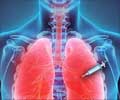
Lung Biopsy - Indications - Procedures - Risks - FAQs - Reference
The procedure by which tissue samples are obtained from the lung is known as lung biopsy. The biopsy tissues obtained from the lungs are examined by a pathologist.
The procedure by which tissue samples are obtained from the lung is known as lung biopsy. The biopsy tissues obtained from the lungs are examined by a pathologist.
About the ResearchResearchers used the Respiragene test on 1,216 confirmed lung cancer cases in cohorts gathered in New Zealand, Spain and the United Kingdom. The test incorporates 20 genetic markers associated with smoking-related lung damage and propensity to lung cancer, along with a smoker's age, family history, and diagnosis of chronic obstructive pulmonary disease (COPD) to derive a predictive risk score on a 1-12 scale whereby higher scores correlate with higher lifetime risk of developing lung cancer, compared to other smokers.
Advertisement

Tumor Markers - For Cancer Diagnosis and Prognosis
An ideal tumor marker for a cancer should be specific to that cancer and not generate false positive results.
An ideal tumor marker for a cancer should be specific to that cancer and not generate false positive results.
"We are very excited by the possibility that advances in genetics, which allow us to better understand why some smokers are more likely to get lung cancer than others, can now help reduce deaths through effective screening tests like CT," said Dr. Young.
Source-Eurekalert