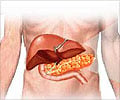
Researchers at the University of Texas M. D. Anderson Cancer Center have found in pre-clinical trials that a molecularly engineered therapy selectively embeds a gene in pancreatic cancer that shrinks or eradicates tumours, inhibits metastasis, and prolongs survival virtually without toxicity.
"This vehicle, or vector, is so targeted and robust in its cancer-specific expression that it can be used for therapy and perhaps for imaging," notes senior author Dr. Mien-Chie Hung, Professor and Chair of Department of Molecular and Cellular Oncology at the institution.In a report published in the journal Cancer Cell, the researchers have described the system as a versatile expression vector-nicknamed VISA. It includes a targeting agent that is also called a promoter, two components that boost gene expression in the target tissue, and a payload that is a gene known to kill cancer cells in this case.
All these are packaged in a fatty ball called liposome, and delivered through veins.
"This looks like a promising approach to gene therapy for pancreatic cancer and we are working to bring it to a clinical trial," says Dr. James Abbruzzese, Professor and Chair of the M. D. Anderson Department of Gastrointestinal Oncology.
It may take around one to two years to complete U.S. Food and Drug Administration requirements for a Phase I trial, he says.
In a study, the researchers loaded the VISA system with a mutant version of a gene named BiK, which expresses a protein that naturally forces cancer cells to kill themselves, in two different types of mice. Boffins created the more lethal mutant and named it BikDD.
Advertisement
The researchers involved a pancreatic cancer line that spreads swiftly, in one test. They say that live imaging showed that in control mice the cancer spread to the liver, spleen, kidneys, bladder, lungs, bone, and intestines. But mice treated with the CMV BikDD showed only a few small tumours in nearby organs.
Advertisement
"All cancer drugs have some toxicity and so cause side effects, which affects the dose that can be administered. The VISA-BikDD produces virtually no systemically acute toxicity or acute pancreatitis," the authors report.
Dr. Abbruzzese says that the phase I clinical trial will advance under a National Cancer Institute Specialized Programs of Research Excellence (SPORE) grant in pancreatic cancer. SPORE awards are designed to translate scientific findings into the clinic.
"There are no good options for pancreatic cancer patients now. That's why we are trying new approaches such as this one as part of SPORE," says Dr. Abbruzzese.
Source-ANI
JAY/M