Waist-hip ratio is a better indicator of obesity than Body mass index (BMI) readings for older adults, according to new research by UCLA endocrinologists and geriatricians.
The researchers from the David Geffen School of Medicine at UCLA said that the ratio of waist size to hip size may be a better indicator when it comes to people over 70 years of age.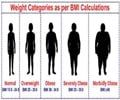
Body Mass Index (BMI)
Body mass index (BMI) is a simple tool that is generally used to estimate the total amount of body fat.
Body mass index (BMI) is a simple tool that is generally used to estimate the total amount of body fat.
"Basically, it isn't BMI that matters in older adults - it's waist size. Other studies have suggested that both waist size and BMI matter in young and middle-aged adults and that BMI may not be useful in older adults; this is one of the first studies to show that relative waist size does matter in older adults, even if BMI does not matter," said Dr. Preethi Srikanthan, UCLA assistant professor of endocrinology and the study's lead investigator.
The researchers used data from the MacArthur Successful Aging Study - a longitudinal study of high-functioning men and women between the ages of 70 and 79.

Obesity - Causes, Symptoms, Diagnosis, Complications, Treatment
Obesity is a condition where there is excess accumulation of body fat which poses a risk to the health of the individual. It can affect children and adults.
Obesity is a condition where there is excess accumulation of body fat which poses a risk to the health of the individual. It can affect children and adults.
They adjusted for gender, race, baseline age and smoking status. The average age of participants was 74.
Advertisement
However, the researchers found no association between all-cause mortality and BMI or waist circumference-the link was only with waist-hip ratio.
Advertisement

Sleep Disordered Breathing in Children Linked to BMI
Waist circumference and body mass index (BMI) are risk factors for all severity levels of sleep disordered breathing (SDB) in children
Waist circumference and body mass index (BMI) are risk factors for all severity levels of sleep disordered breathing (SDB) in children
Thus, if the waist-hip ratio rose from 0.8 to 0.9 or from 0.9 to 1.0, it would mean a 28 percent relative increase in the death rate. Put another way, if hip size is 40 inches, an increase in waist size from 32 to 36 inches signalled a 28 percent relative death-rate increase.
But the relationship was not graded in men. Instead there was a threshold effect-the rate of dying was 75 percent higher in men with a waist-hip ratio greater than 1.0 (men whose waists were larger than their hips) relative to those with a ratio of 1.0 or lower.
There was no such relationship with either waist size or BMI.
However, the authors said that the study may have some limitations-BMI may be underestimated because height and weight were self-reported and older adults tend to report those numbers from their younger, peak years.
Besides, waist-hip ratios, waist circumference and BMI numbers were based on single measurements, limiting the researchers' ability to gauge how changing body size in old age can affect mortality risk.
The study has been published online in the peer-reviewed journal Annals of Epidemiology.
Source-ANI
RAS