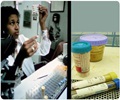
Using a “toolbox” approach or multiple means researchers have concluded that almost 60 percent of Nebraska streams had excessive levels of fecal bacteria. These water bodies were declared impaired by federal and state environmental laws in 2004.
The “tool box’’ method of testing was more conclusive in pinpointing the source of contamination than testing with a single method. Effective pollution-control strategies can be developed only if researchers can identify the source of the contamination.In collaboration with the Nebraska Department of Environmental Quality, the U.S. Environmental Protection Agency (EPA), and the University of Cincinnati, U.S. Geological Survey (USGS) scientists used a toolbox approach when investigating the sources of fecal bacteria within the Plum Creek watershed in south-central Nebraska. The scientists report their findings in the May-June 2007 issue of the Journal of Environmental Quality.
This research was funded by the Nebraska Department of Environmental Quality, the U.S. Geological Survey Cooperative Water Program, and the U.S. Environmental Protection Agency.
In 2001, monitoring studies by the Nebraska Department of Environmental Quality named Plum Creek the most contaminated tributary to the middle reaches of the Platte River. The researchers used two fecal source-tracking tools to analyze contaminated water and stream-sediment samples in the Plum Creek watershed.
The source-tracking tools use genetic material from bacteria collected in water and sediment samples to determine their source, either by comparing the genetic material with that of known fecal bacteria sources, or by looking for a “marker” within the genetic material that is associated with a specific fecal source. The results of the study revealed that cattle and wildlife were the dominant sources of fecal bacteria found in water and stream sediment samples at the main study site located in an upper reach of the creek.
“While the two methods led to similar overall interpretations, using both methods together gave us a clearer picture of potential sources and the strengths and weaknesses of the methods used,” said USGS Hydrologist Jason Vogel, lead author of the study. “Additionally, results from bacteria found in stream-bottom sediment also suggest that different tools for tracking fecal contamination may have varying relevance to the more specific goal of tracking the sources of E. coli in water or soil within the watershed.”
Advertisement
Determining the source of the bacteria is necessary to implement appropriate pollution-control practices and comply with water-quality standards required by the Clean Water Act. Further research is needed to continue to develop and refine existing and new tools for identifying the sources of fecal contamination in water and sediment.
Advertisement
MED/M