In a dark and muddy alley in the Nile Delta town of Damietta, where Egypt's latest fatal bird flu victim Hanem Atwa Ibrahim lived, inhabitants fear the authorities more than the virus.
"It was the will of God that she died. The chickens had nothing to do with it," says Husseini Ahmed Amine, 54, a furniture maker who employs a son of the dead woman, who was aged 50.Most of the inhabitants of the Ezbet el-Lahm district pay scant attention to the government's campaign against the H5N1 virus which, after a summer respite, killed four people, all women, in the space of a week over New Year.
Health Minister Hatem al-Gabali warned in December against "slackness in the preventive measures taken to fight bird flu especially as winter approaches."
But here, as elsewhere in the country, distrust of the government is widespread.
A national campaign to slaughter possibly infected birds is more often than not seen as just another threat from authorities in which people have no faith.
Ibrahim's death was the 19th fatality in Egypt where there has been a total of 43 cases of bird flu in humans since the disease was first recorded here in February 2006. Women and children have borne the brunt of the virus because of their role in taking care of domestic fowl.
Advertisement
"The state and businessmen profit from bird flu. It's all just about trying to get people to buy frozen chickens. That way they'll make money off our back," she adds.
Advertisement
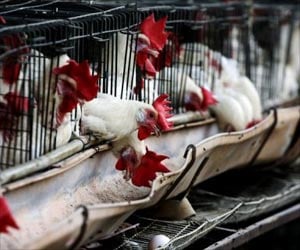
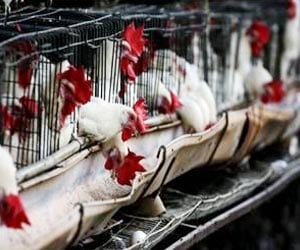
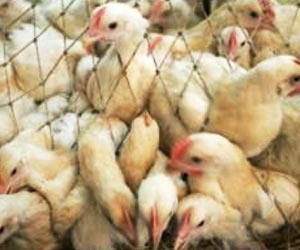
But despite a government ban on raising poultry on rooftops -- an age-old tradition in Egypt -- chicken, ducks and geese continue to squawk and quack from cages on most of this district's rooftops, alongside a multitude of pigeon coops.
According to the UN's Food and Agricultural Organisation, Egypt and Indonesia are the countries most likely to see the virus mutate into a form that is contagious among humans, because of people's close contact with poultry.
It is a challenge to get people to stop raising and eating poultry in a country where meat is a luxury for most, and birds can be fed cheaply on food leftovers.
"I don't believe in bird flu. We look after our poultry, nothing can happen to them," says Amine. "What's more their factory chicken has no taste, you can't even tell it's chicken."
Many of those infected are fearful of revealing their symptoms as they would lose a source of revenue and they fear the anger of their neighbours throughout the village who may have their flocks slaughtered.
As a result, many sufferers are often hospitalised too late for the medical treatment to work.
Abdessalam Essayyed, 46, is one of Ezbet el-Lahm's few inhabitants to be fearful after his neighbour died.
"I immediately killed our ducks and chickens," he says, pointing to dried blood on the concrete floor in front of his poultry's small cage.
The Health Ministry recently called for heightened vigilance saying that preventative measures were not being implemented against the disease because of "a conviction that the virus has gone."
According to the World Organisation for Animal Health, the highly infectious strain of the H5N1 avian flu virus can be eradicated if it is dealt with effectively in Egypt, Indonesia and Nigeria, where it has become endemic.
Source-AFP
LIN/M