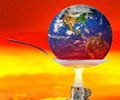
Health professionals must show leadership in tackling the potentially catastrophic effects of climate change, according to an editorial in this week’s BMJ.
Dr Robin Stott of the Climate and Health Council, together with BMJ Editor Fiona Godlee and Lancet Editor Richard Horton, believe that health professionals have a duty to be part of the solution and urge readers to sign the Climate and Health Council declaration at www.climateandhealth.orgThe present climate related extinction event, so far a minor one, is caused by humans, they write. Excessive amounts of carbon dioxide are being poured into the atmosphere as a result of human activity, even though we know what the consequences will be.
They warn that alterations in food production; rises in sea levels; the spread of vector borne disease; and water shortages are already aggravating health problems, particularly in poor countries, while the impact of climate change will get much worse, and predictions of a hundred million climate refugees is no longer fanciful.
They outline several ways in which health professionals should act.
Firstly, they say, we should inform our professional colleagues and the wider community about the health consequences of climate change, and the major health benefits that will result from tackling it. Secondly, we should set an example by reducing our personal carbon footprints and ensuring that the organisations we work for do likewise.
Thirdly, health professionals should make a concerted effort to contribute to the post Kyoto framework, and to lobby at the United Nations’ conferences on climate change in Bali in December and then in Copenhagen in November 2009.
Advertisement
Climate change challenges the health of everybody, they say, but particularly of people with the fewest resources. It is the major challenge of the 21st century. Unless we cap carbon emissions in ways that ensure transfer of resources to the poorer nations, we may all go the way of the dinosaurs, and the going will not be comfortable.
Advertisement
The call to act is also reiterated in a letter to this week’s BMJ from the Presidents of the Faculty of Public Health, the Royal College of Physicians London, and the Royal College of Paediatrics and Child Health. They write: “Only by firm and decisive action now, can we, as a global community, hope to avert or mitigate an impending public health catastrophe of immense proportions.”
Source-BMJ
KAR/P