Hundreds of disabled people are forced to beg in the streets of the Ethiopian capital. Some people beg from makeshift wheelchairs, the less fortunate dragging themselves on their hands from car to car.
Disabled people are seldom taken care of by institutions here; mostly they are either left to their own devices on the street or kept behind closed doors because their families are ashamed of them.
"The situation is worse in the countryside than in the cities. Generally speaking, people think the only place for a disabled person is in the street to beg or in front of a church, otherwise they are ... segregated from the community, which can lead to serious mental disorders," he told AFP.
The ILO has set up a programme, with funding from Ireland, in an attempt to reintegrate disabled people into society through training courses, raising awareness and encouraging solidarity among disabled people.

The Cholamandalam Health Insurance Policies
Cholamandalam MS General Insurance Company (Chola MS) a joint venture of Murugappa Group & Mitsui Sumitomo Insurance offers a wide range of health insurance policies.
Cholamandalam MS General Insurance Company (Chola MS) a joint venture of Murugappa Group & Mitsui Sumitomo Insurance offers a wide range of health insurance policies.
"I never dreamt of having my own business, but today, even if I'm still facing challenges, I'm happy. I earn about 500 birr a month, but it can fluctuate and I employ five people including two women with disabilities," she told AFP.
Advertisement
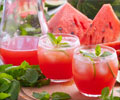
The Watermelon Interesting Health Facts
For stunning looks like that of Brangelina Jolie and winning knocks like Sachin and Dhoni - go for watermelon fruits. Watermelon acts as a natural moisturizer as well as a toner and keeps the skin cool, glowing and fresh.
For stunning looks like that of Brangelina Jolie and winning knocks like Sachin and Dhoni - go for watermelon fruits. Watermelon acts as a natural moisturizer as well as a toner and keeps the skin cool, glowing and fresh.
"I hate two things in life: dependency and begging. This program has changed my life and now even my family's perception of disabilities has changed because I'm not dependent on them, and because sometimes I even earn more than them," Shemsia said, leaning on a crutch.
Advertisement
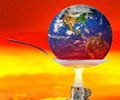
Health Effects of Global Warming
Greenhouse effect causes excessive heat to build up in the earth’s atmosphere causing global warming and affects the environment and health.
Greenhouse effect causes excessive heat to build up in the earth’s atmosphere causing global warming and affects the environment and health.
Statistics on disabled people are hard to come by in Ethiopia.
"The estimation is between seven and 10 percent of the population living with disabilities. For them the poverty level is far greater, and they suffer from discrimination," ILO's Fantahun said.
The ILO set up its programme six years ago and since then more than 1,100 disabled Ethiopian women have undergone training while new laws have been passed to improve the status of handicapped people, notably in the world of work.
Yetnebersh Nigussie, 26, is a young blind woman full of energy. She studied law and now works in an NGO that helps disabled people. She has also started a school for underprivileged children.
"Education changed my life so I wanted to provide this weapon to other kids. Education is a tool for independence. Blindness has been my chance because I come from a poor rural family where girls are married very young, like at eight years old," she told AFP.
In her school 130 children are enrolled, many of them disabled, like six-year-old Seham Shikur.
Despite being blind, she wants to "be a pilot and fly to China".
Source-AFP
RAS