Two drugs approved for use as second line therapy for chronic myelogenous leukemia are showing promising results as frontline therapy for newly diagnosed patients in two clinical trials, research teams led by scientists at the University of Texas M. D. Anderson Cancer Center report at the 49th annual meeting of the American Society of Hematology.
All patients in both trials have a complete cytogenetic response - absence of the aberrant chromosome that causes the disease - after one year on either drug. Approximately 90 percent reach complete cytogenetic response as early as 6 months."These are early results but certainly encouraging so far in both cases," says lead author Jorge Cortes, M.D., professor in M. D. Anderson's Department of Leukemia. Patients in both trials are in the chronic, or initial phase, of CML and had not received prior therapy for their disease.
The two medications are dasatinib, the Bristol-Myers Squibb drug known as Sprycel(r), and nilotinib, the Novartis drug known as Tasigna(r). Both have been approved by the U.S. Food and Drug Administration for use in CML patients whose disease becomes resistant to the frontline therapy imatinib, also a Novartis drug known as Gleevec(r), or who become intolerant to the drug.
Cortes and colleagues compared the two medications at 3, 6 and 12 months with historical data from patients who took either 400 mg or 800 mg daily of Gleevec.
For dasatinib, at three months 26 of 33 patients (79 percent) achieved complete cytogenetic response. At six months 30 of 32 (94 percent) and at 12 months all 24 evaluable patients were at a complete cytogenetic response.
For nilotinib, at three months 21 of 22 patients (95 percent) achieved complete cytogenetic response with all 13 evaluable patients at six months and all 11 at 12 months reaching complete cytogenetic response.
Advertisement
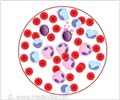
As frontline treatment, imatinib has increased the 5-year survival rate for CML patients from 50 percent to 90 percent. Imatinib targets the aberrant Bcr-Abl protein, caused by a chromosomal abnormality called the Philadelphia Chromosome, which fuels an overabundance of white blood cells and immature stem cells called blasts that crowd out red blood cells and platelets.
Advertisement
Both clinical trials continue to enroll patients. Side effects are being closely monitored and some patients in each trial had their doses reduced or treatment temporarily interrupted to deal with toxicities. "We can't say at this moment that either drug has major problems with side effects," Cortes said.
The trials tap M. D. Anderson's longstanding expertise in all three drugs. M. D. Anderson was a leader in the registration clinical trial that led to approval of imatinib for CML.
"As some of our patients started to develop resistance to imatinib, we started searching for agents to bypass that resistance, working with the pharmaceutical companies to test new agents," says Hagop Kantarjian, M.D., chair of M. D. Anderson's Department of Leukemia.
Kantarjian developed, designed and conducted the clinical trials that led to approval of nilotinib by the FDA last month for patients who can no longer take imatinib.
Moshe Talpaz, M.D., developed, designed and conducted clinical trials that led to approval of dasatinib by the FDA in June 2007 for the same group of patients. Talpaz is now at the University of Michigan.
Cortes is leading research into a third drug, bosutinib, produced by Wyeth Pharmaceuticals, as a second-line therapy for CML. (Please see separate news release.)
"We now have enough tools to allow the vast majority of CML patients to live a normal life," says Kantarjian. "And we are always searching for better alternatives."
Current drugs successfully target all mutations that cause CML except for one, known as the T3151 variant. "We're looking at other agents to tackle that one," Kantarjian says.
Source-Eurekalert
KAR/M