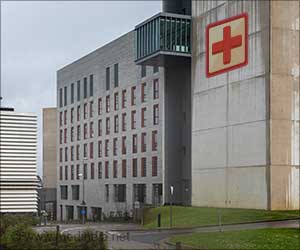
Emergency department overcrowding in Australia’s public hospitals is creating access block with patients waiting for hours in the ED or giving up and going home, according to articles published in the latest Medical Journal of Australia.
Access block is defined as the percentage of all patients admitted, transferred or dying in the emergency department whose total ED time exceeds eight hours.Professor George Braitberg, Professor of Emergency Medicine, Monash University in Melbourne, says reduced bed numbers, an ageing population, and current management of supply and demand are mostly to blame for access block.
“Initiatives to prevent access block should be aimed at long-term structural changes to bed availability to meet the needs of a complex and ageing population,” Prof Braitberg says.
“We know access block causes ambulance diversion, increased length of patient stay, and increased patient mortality.
“There is also a high correlation between overcrowding and patients who leave an ED without treatment.”
In a related study in the journal, Professor George Jelinek, Professor of Emergency Medicine at the University of Western Australia, and his co-author Dr Jacqui Hall, former Registrar of Emergency Medicine at Sir Charles Gairdner Hospital, found busy times were linked to high numbers of patients who did not wait (DNW).
Advertisement
In her article for the journal, Dr Clare Skinner, Registrar in Emergency Medicine at Royal North Shore Hospital in Sydney, says overcrowding and overwork resulting from access block are harmful to the clinical staff.
Advertisement
“Staff who feel they are unable to provide timely and high-quality care to their patients become burnt out…creating further stress for those left behind,” Dr Skinner says.
“It is vital that steps be taken to improve workforce recruitment and retention, and to better manage escalating workloads.
“These measures must deal with education and training needs, industrial conditions, availability of hospital beds, and provision of appropriate primary, community and outpatient care.”
Mrs Wei Zheng, Senior Surveillance Officer at the Centre for Epidemiology and Research at the NSW Department of Health, and her co-authors studied the increase in visits to NSW EDs over the Christmas and New Year holiday period.
They found this was the busiest time of the year, mainly for non-admitted patients. This was partially as a result of patients presenting to emergency departments because they were unable to see a GP.
“Improving access to GPs, but also to broader hospital and community-based health care services over the holiday period, should be considered for managing the increased demand,” Ms Zheng says.
The Medical Journal of Australia is a publication of the Australian Medical Association.
Source-MJA
SRM/R