

What Causes Snoring and its Treatment?
Turbulent airflow causes tissues of the nose and throat to vibrate and the noise produced by these vibrations is called snoring.
Turbulent airflow causes tissues of the nose and throat to vibrate and the noise produced by these vibrations is called snoring.
The researchers evaluated the craniofacial growth in children with enlarged tonsils and adenoids, after dental appliance (Bioajusta X) treatment. They also compared the prevalence of snoring before and after treatment.
"The primary finding of the study was the positive influence of this treatment on snoring in children with enlarged tonsils and adenoids and narrow maxillary arch," said principal investigator Walter R. Nunes Jr., DDS, MS, who is affiliated with the Otolaryngology Department of the University of São Paulo Medical School in Brazil.

About Sleep Disorder
Sleep disorders can either be having difficulty in getting sleep or dozing off at inappropriate time.
Sleep disorders can either be having difficulty in getting sleep or dozing off at inappropriate time.
Cephalometric analysis was used to access the growth direction comparing the vertical jaw relationship according to the angle of the palatal plane with the mandibular plane (ANS-PNS / ML). The parents filled out a questionnaire about respiratory symptoms. They were re-evaluated and compared after six months.
Advertisement
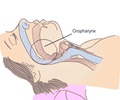
Obstructive Sleep Apnea - Overview
Obstructive sleep apnea should be suspected in overweight middle aged adults who snore loudly and which can cause interruption of breathing for 10 seconds or more and this results in reduced blood o
Obstructive sleep apnea should be suspected in overweight middle aged adults who snore loudly and which can cause interruption of breathing for 10 seconds or more and this results in reduced blood o
This abstract will receive the Graduate Student Research Award at the AADSM 20th Anniversary Meeting.
Advertisement
Source-Eurekalert