
Test Your Knowledge on Heart
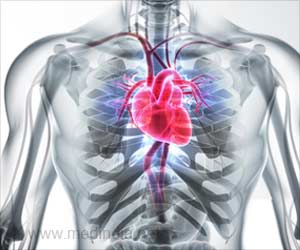
The heart is a fist-sized organ that pumps blood throughout the body. It is the primary organ of the human circulatory system that helps in circulation of blood throughout the body...
The heart is a fist-sized organ that pumps blood throughout the body. It is the primary organ of the human circulatory system that helps in circulation of blood throughout the body...
Recruitment of participants began in July 2000, with follow-up through May 2008. Five-year risk estimates for new CHD were categorized as 0 percent to less than 3 percent, 3 percent to less than 10 percent, and 10 percent or more using hazards models.
Model 1 incorporated age, race/ethnicity, sex, tobacco use, antihypertensive medication use, systolic blood pressure and total and high-density lipoprotein cholesterol measurements.
Model 2 used these risk factors plus CACS. The researchers calculated the net reclassification improvement using model 2 vs. model 1.
Among a final group of 5,878 individuals, there were 209 CHD events during a median (midpoint) follow-up of 5.8 years, of which 122 were major events (heart attack, death from CHD, or resuscitated cardiac arrest).
Advertisement

Animation of heart attack symptoms
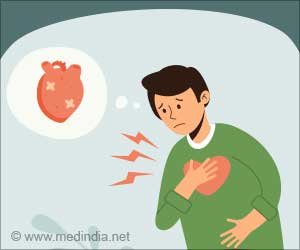
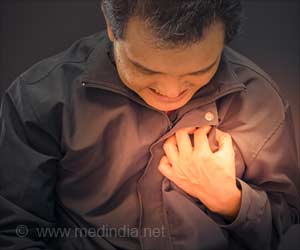
Heart attack can cause symptoms such as Chest pain or discomfort, Shortness of breath and pain in neck, back, arm, or shoulder and is due to blockage of blood supply to the heart muscles
Heart attack can cause symptoms such as Chest pain or discomfort, Shortness of breath and pain in neck, back, arm, or shoulder and is due to blockage of blood supply to the heart muscles
With the addition of CACS to the model, an additional 23 percent of those who experienced events were reclassified as high risk and an additional 13 percent of those who did not experience events were reclassified as low risk.
Advertisement

Top 11 Latest Facts & Figures on Heart Attacks
Heart attack usually occurs when a clot blocks the blood supply to the heart. If not treated, it can lead to death. Here are must know facts on heart attacks.
Heart attack usually occurs when a clot blocks the blood supply to the heart. If not treated, it can lead to death. Here are must know facts on heart attacks.
"The results of this study demonstrate that when CACS is added to traditional risk factors, it results in a significant improvement in the classification of risk for the prediction of CHD events in an asymptomatic population-based sample of men and women drawn from 4 U.S. racial/ethnic groups," the authors said.
"Incorporation of an individual's CACS leads to a more refined estimation of future risk of CHD events than traditional risk factors alone," the authors added.
The study has been published in the April 28 issue of JAMA.
Source-ANI
SRM