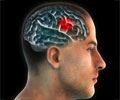
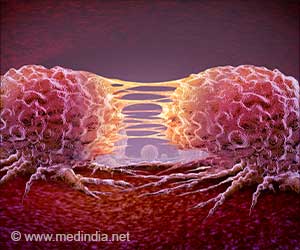
The first complete genomic sequencing of a brain cancer cell line has been performed by researchers at UCLA's Jonsson Comprehensive Cancer Center.
This is a discovery that may lead to personalized treatments based on the unique biological signature of an individual's cancer and a finding that may unveil new molecular targets for which more effective and less toxic drugs can be developed.
About Brain Tumor
Brain tumors are the abnormal growth of brain cells that may be benign or metastatic. Brain tumors account for about 2.4% of all the tumor diagnosesandare most challenging due to their critically delicate location.
Brain tumors are the abnormal growth of brain cells that may be benign or metastatic. Brain tumors account for about 2.4% of all the tumor diagnosesandare most challenging due to their critically delicate location.
Using the latest technology, the sequencing was done in less than a month and cost about $35,000. By comparison, the sequencing of the human genome took years, required huge teams of scientists and cost more than $1 billion, said Dr. Stan Nelson, a professor of human genetics, a researcher at UCLA's Jonsson Comprehensive Cancer Center and senior author of the study.
"This is very exciting because we, as scientists, can now move forward with revealing complete cancer genomes," said Nelson, who directs the cancer center's Gene Expression Shared Resource. "Cancer is at its heart a genetic disease. Cancer cells have acquired mutations that allow them to invade tissues and to not live by the normal rules. The changes from normal (mutations) that have given the cancer these special properties are encoded in DNA, and the entire DNA sequence has just been to complex and costly to decode until now."
Head Injury | Brain Injury Overview Types Causes Symptoms Diagnosis Treatment
Head injury or traumatic brain injury is a leading cause of disability among children and young adults that leads to varying degrees of physical and mental stability. Fortunately, it is also one of the preventable brain disorder.
Head injury or traumatic brain injury is a leading cause of disability among children and young adults that leads to varying degrees of physical and mental stability. Fortunately, it is also one of the preventable brain disorder.
The sequencing was done on a much studied glioblastoma cell line called U87, which is being used in more than a dozen UCLA cancer laboratories and studied in more than 1,000 laboratories worldwide, Nelson said. They picked the cell line, he said, because it has been so thoroughly examined. The sequencing will allow scientists who have studied the cell line to reinterpret their findings and may prompt researchers to move in new directions going forward.
Advertisement

Brain Depression
Interactive section of Medindia provides information about chemistry of Brain depression
Interactive section of Medindia provides information about chemistry of Brain depression
"This was the most thorough sequencing analysis of an individual cancer cell line that has been performed to date," Nelson said. "We developed specific informatics tools to help with the analysis and used the most powerful technology available. As scientists, we previously didn't know most of the mutations that occur within a given cancer – we're blind to them. Now this new technology allows us to look at every single cancer and decode that cancer genome completely so there's no chance we're missing a mutation that may be causing the disease."
Advertisement

Brilliant Human Brain
The most amazing and complex organ in the entire universe, the human brain continues to remain an enigma.
The most amazing and complex organ in the entire universe, the human brain continues to remain an enigma.
Patient-specific diagnostics also could be developed to monitor for cancer recurrence, Nelson said.
"Sometimes it's difficult to tell if a cancer is coming back or if what you're seeing is scar tissue," Nelson said. "Scientists could develop a sensitive molecular assay that looks for a unique mutation found only in the cancer cells and not in the healthy cells. If that mutation is found by the assay, the cancer has returned and patients could be promptly treated when the recurrence is at its earliest stage and easiest to treat. Conversely, such an assay could be used to determine when the cancer has been effectively eliminated and it's safe to discontinue what are harmful treatments."
Just that one simple assay, Nelson said, would have an amazing impact on how cancers are treated.
"Oncologists would be able to know, definitively, when they can stop giving chemotherapy because it's no longer needed or when they have to resume chemotherapy because the cancer has returned," he said.
Nelson and his team created a web site where researchers can access and retrieve the sequencing data for use in their own experiments, a sort of mini human genome project. Nelson believes sequencing all cancer genomes will result in a significant paradigm shift in the way cancers are treated.
The team of scientists within Nelson's lab has set up a process at UCLA to sequence other cancer cell lines in a highly accurate and cost effective way. His goal is to be able to sequence a patient's individual cancer and turn the data around quickly enough to provide oncologists with the information they need to make immediate treatment decisions.
Source-Eurekalert
RAS