
Lung Cancer - Types, Causes, Symptoms, Diagnosis, Treatment and Prevention
Lung cancer is a malignant tumor in the lung tissues. Smoking is the main cause of lung cancer with symptoms like recurrent respiratory diseases.
Lung cancer is a malignant tumor in the lung tissues. Smoking is the main cause of lung cancer with symptoms like recurrent respiratory diseases.
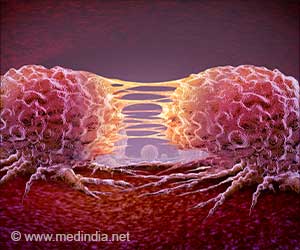
In order to investigate the relationship between tumor budding and the prognostic significance, researchers reviewed the cases of 201 consecutive patients who had undergone complete resection of adenocarcinoma of the lung measuring ¡Ü 30 mm( 1.25 inches) in diameter. The presence of tumor budding was significantly associated with lymph node metastasis, pathologic stage, vascular invasion, lymphatic invasion, and pleural invasion. Furthermore, the overall five-year survival rates of the group with budding and the group without budding was 67.5 and 88.3 percent, respectively, and the difference was significant.
"Overall, the pilot study identified that tumor budding is a distinct morphologic feature that has biologic and prognostic significance; moreover, the presence was identified as a significant predictor of an unfavorable outcome," explained lead investigator, Yoko Yamaguchi, MD. "Justifiably, clarification of the molecular mechanism that causes budding in lung adenocarcinoma will be important in the future."
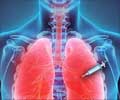
Lung Biopsy - Indications - Procedures - Risks - FAQs - Reference
The procedure by which tissue samples are obtained from the lung is known as lung biopsy. The biopsy tissues obtained from the lungs are examined by a pathologist.
The procedure by which tissue samples are obtained from the lung is known as lung biopsy. The biopsy tissues obtained from the lungs are examined by a pathologist.
Source-Eurekalert

Respiratory Diseases - Diseases of the Human Respiratory System
Respiratory diseases affect any part of the respiratory system. Some of the lung diseases like chronic obstructive pulmonary disease can lead to respiratory failure.
Respiratory diseases affect any part of the respiratory system. Some of the lung diseases like chronic obstructive pulmonary disease can lead to respiratory failure.