A team of British scientists have come one step closer to curing nut allergies after a small-scale clinical trial in which they successfully built up children's tolerance to peanuts, they said Friday.
Researchers at Addenbroke's Hospital in Cambridge, eastern England, gave small daily doses of peanut flour to four children who were severely allergic to peanuts, building up the amount over time.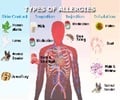
Allergy - Causes - Symptoms - Diagnosis - Treatment - FAQs - Videos
An allergy is a hypersensitive disorder of immune system. Substances that often cause allergic reactions are pollen, dust mites, mold spores, pet dander, food, insect stings and medicines.
An allergy is a hypersensitive disorder of immune system. Substances that often cause allergic reactions are pollen, dust mites, mold spores, pet dander, food, insect stings and medicines.
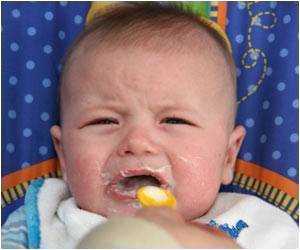
In the study, published in the journal Allergy, four children were initially given five milligrams of peanut flour mixed into yoghurt.
Over the next six months, the dose was increased every fortnight until they could tolerate at least 800 mg -- the equivalent of five whole peanuts.

Peanut Allergy Cure May Be Available Within Five Years
A US expert writing in The Lancet medical journal said a form of immunotherapy that could get rid of a person's allergy to peanuts is likely within five years.
A US expert writing in The Lancet medical journal said a form of immunotherapy that could get rid of a person's allergy to peanuts is likely within five years.
However, they must maintain their tolerance by ingesting five peanuts a day, said Andrew Clark, a consultant in paediatric allergy who led the research.
Advertisement

Scientists Create New Mouse Model for Peanut Allergy
A mouse model that can actually portray the symptoms of peanut allergy has been developed by researchers from Chicago.<
A mouse model that can actually portray the symptoms of peanut allergy has been developed by researchers from Chicago.<
They would be monitored for the next three or four years to assess their tolerance levels, Clark said, adding that there was no reason why the clinical trial could not be extended to adults.
Advertisement
Consuming Peanut at Infancy may Help to Keep Allergy at Bay
Kids who avoid peanut in infancy and early childhood are 10 times as likely to develop peanut allergy as those who are exposed to the groundnut, according to a new study.
Kids who avoid peanut in infancy and early childhood are 10 times as likely to develop peanut allergy as those who are exposed to the groundnut, according to a new study.
About one in 50 children in Britain are allergic to peanuts, and ingesting them can cause difficulty in breathing, cardiac arrest and even death.
The trial was sponsored by the Evelyn Trust, a Cambridge charity supporting medical research.
Source-AFP
SRM