
Language Skills Deficient in Kids With Hearing Loss in 1 Ear
Loss of hearing in one ear hurts children's ability to comprehend and use language, according to a new study.
Loss of hearing in one ear hurts children's ability to comprehend and use language, according to a new study.
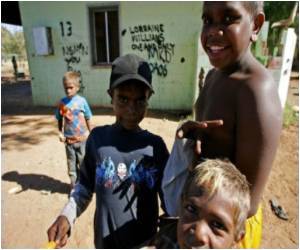
"I realised while working with Aboriginal communities that kids weren't talking with their grandparents in their language," producer Cath Trimboli, told AFP.
"It is disappearing, kids are not encouraged to talk in this language. So I wanted to work on this."

Study Finds How the Human Brain Learns Language
A new study from the University of Rochester says that there is no single advanced area of the human brain that gives it language capabilities beyond those of any other animal species.
A new study from the University of Rochester says that there is no single advanced area of the human brain that gives it language capabilities beyond those of any other animal species.
"Among these 60 (languages), there would be only six or seven that are passed naturally from parents to children," John Hobson, a University of Sydney lecturer in indigenous studies, told AFP.
Advertisement

Wither the Unity in the Diversity: Navigating India's Language Divides
When advocate Govinder Singh rose to make an argument in the Delhi High Court this month, he did what no lawyer had ever done before him and addressed the judge in Hindi.
When advocate Govinder Singh rose to make an argument in the Delhi High Court this month, he did what no lawyer had ever done before him and addressed the judge in Hindi.
"It was considered as the Devil's tongue. And parents began to want their kids to speak English: when people are told again and again that speaking their language is bad, they end up believing it," he said.
Advertisement

Childrens' Language Skills Improve Remarkably With Early Cochlear Implantation
A new study has shown children with hearing loss can benefit immensely if they receive a cochlear implant before 18 months of age.
A new study has shown children with hearing loss can benefit immensely if they receive a cochlear implant before 18 months of age.
Bilingual schools have opened in the Northern Territory and Western Australia, while about 60 New South Wales schools offer courses in native languages.
"The program is not only for Aboriginal kids but for everyone. I hope it paves the way for other people to seriously think of the importance of languages," Trimboli said.
According to Hobson, TV programmes alone cannot save endangered languages, but they can increase their profile.
"It is very difficult to save a language, it requires the whole community efforts. TV programmes alone can't restore them, but they raise awareness," he said.
Aborigines have a history extending over about 40,000 years, the world's oldest surviving culture, but are often marginalised and impoverished in modern Australia, where they make up about two percent of the 22 million population.
Source-AFP
SAV