Education on asthma management in children delivered in small, interactive groups improved asthma outcomes and the overall care of children with asthma, found researchers in a study in CMAJ. Children who participated in the interactive education program were 38% less likely to require emergency care and required fewer courses of oral corticosteroids compared with the children who did not participate in the program.
The study, a randomized controlled trial, looked at 398 children aged 3 to 16 years admitted to the emergency department in Winnipeg, Manitoba, Canada. Children in the control group followed the usual care recommended by their family physician along with an asthma information booklet developed for children admitted to hospital with asthma.The intervention group participated in a 4-week asthma care program developed by the Children's Asthma Education Centre as well as their usual medical care. The materials included specific educational materials, personalized mailings to reinforce the program's key points and age-appropriate pamphlets. A key component was small-group interaction for children and their families to discuss successes and failures in managing their child's asthma.
While the number of visits to the emergency department decreased in both groups in the year after the study, children in the intervention group made significantly fewer visits (.45 visits per child) compared with the control group (.75 visits). The likelihood of children in the intervention group requiring oral corticosteroids was reduced by 36%. As well, primary caregivers in this group missed significantly less work than the control group, suggesting the asthma was under better control.
"The most important outcomes of providing education about asthma involve changes in the use of health care services," write Dr. Wade Watson from the Children's Asthma Education Centre at The Children's Hospital, Winnipeg and and coauthors. "Post-education outcomes that have been identified by researchers include such things as reductions in the number of visits to emergency departments and unscheduled visits to physicians and in costs related to health care."
Allergy - Causes - Symptoms - Diagnosis - Treatment - FAQs - Videos
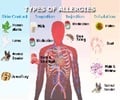
An allergy is a hypersensitive disorder of immune system. Substances that often cause allergic reactions are pollen, dust mites, mold spores, pet dander, food, insect stings and medicines.
An allergy is a hypersensitive disorder of immune system. Substances that often cause allergic reactions are pollen, dust mites, mold spores, pet dander, food, insect stings and medicines.
In a related commentary, Dr. Christopher Cates of the Department of Community Health Sciences, St. George's University of London, UK, writes that as only 398 of 2901 eligible families were recruited in to the study, those families may have been more highly motivated. "We cannot assume that the small-group format would work equally well with families who are less motivated, he states."
Advertisement

Asthma Management
Metered Dose Inhalers(MDI), which delivers medictions directly to the lungs, can be most effectively used in the treatment of asthma.
Metered Dose Inhalers(MDI), which delivers medictions directly to the lungs, can be most effectively used in the treatment of asthma.
Source-Eurekalert
SRM