
Clinical Trials | Drug Trials - Types Protocol Development and Approval FAQs
Clinical trials are experiments that yield useful information to clinicians if a particular treatment is of any value to a patient.
Clinical trials are experiments that yield useful information to clinicians if a particular treatment is of any value to a patient.
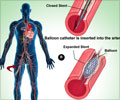
An international group of researchers from 18 countries found patients undergoing angioplasty did not benefit from a lower dose of UFH compared to a standard dose in those on fondaparinux.
Importantly, the addition of either low or standard dose UFH to fondaparinux did not increase serious bleeding and prevented clot formation in equipment during angioplasty when compared to patients treated with fondaparinux alone in OASIS 5. As a result, adding standard dose UFH to fondaparinux maintains the major advantage of fondaparinux (lower bleeding) while preventing clotting during the angioplasty procedure.

Clinical Trials and Its different Phases
Clinical trials serve as a vital component for improving the treatment of medical conditions as they lead to higher standards of patient care.
Clinical trials serve as a vital component for improving the treatment of medical conditions as they lead to higher standards of patient care.
Dr. Jolly is scheduled to present the results of the FUTURA-OASIS 8 (Fondaparinux with UnfracTionated heparin dUring Revascularisation in Acute coronary syndromes) trial at the annual European Society of Cardiology Congress in Stockholm, Sweden on August 31. The study was also published simultaneously in the Journal of the American Medical Association (JAMA).
Advertisement

New Blood Thinner May Work Without Bleeding Risk
When studying a new blood thinner, one of the first signs the drug is working is seeing a slight increase in minor bleeding—nose bleeds and bruising
When studying a new blood thinner, one of the first signs the drug is working is seeing a slight increase in minor bleeding—nose bleeds and bruising
The low dose regimen did not reduce the risk of major or minor bleeding or vascular access complications compared to standard dose regimen. The low dose regimen did not lower the risk of major bleeding but did lower minor bleeding by 60 per cent. There was a trend, however, for higher risk of death, myocardial infarction or target vessel revascularization with low dose vs. standard dose UFH. The rates of catheter thrombosis were very low (0.5 per cent and 0.1 per cent in the low and standard dose UFH groups). In the standard dose arm, only about one in five patients required an additional UFH bolus to reach target ACT.
Advertisement

Scientists Create Safer Alternative to Controversial Blood Thinner Heparin
A team of researcher from Rensselaer Polytechnic Institute in New York has announced the creation of a safer alternative to the commonly used and controversial blood thinner heparin.
A team of researcher from Rensselaer Polytechnic Institute in New York has announced the creation of a safer alternative to the commonly used and controversial blood thinner heparin.
The rates of peri-PCI major bleeding in FUTURA-OASIS 8 (1.4 per cent low dose and 1.2 per cent standard dose) were not significantly different than the rate observed in the fondaparinux arm of the OASIS 5 trial that underwent PCI (1.5 per cent) but lower than the enoxaparin arm of the OASIS 5 trial that underwent PCI (3.6 per cent).
"What this implies is that the standard dose of UFH may be the optimal treatment strategy in PCI patients on fondaparinux while maintaining the major advantage of fondaparinux which is a low rate of major bleeding," said Dr. Salim Yusuf, chair of the FUTURA-OASIS 8 steering committee, a professor of medicine in the Michael G. DeGroote School of Medicine and director of the Population Health Research Institute at McMaster University and Hamilton Health Sciences in Canada.
Source-Eurekalert