The Nobel Prize in Medicine year 2000-2004
P
M
 Nobel Prize in Medicine 2000-2004
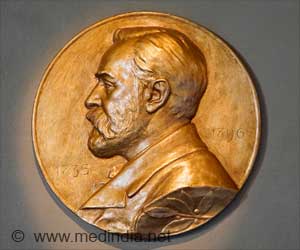
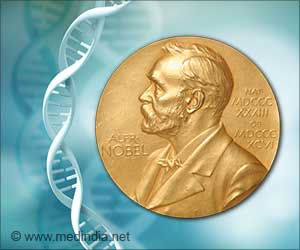
 The Nobel Prize is an International Award governed by the Nobel Foundation in Stockholm, Sweden. It consists of a medal, personal diploma, and a cash award.
First Noble Prize in Physiology or Medicine was awarded in 1901 to Emil von Behring for his work on serum therapy.
Since then The Nobel Prize in Medicine has highlighted a number of important discoveries like penicillin, genetic engineering and blood-typing. Find out more about the Nobel Laureates in Physiology or Medicine and their work from 2000 to 2004
The Nobel Prize is an International Award governed by the Nobel Foundation in Stockholm, Sweden. It consists of a medal, personal diploma, and a cash award.
First Noble Prize in Physiology or Medicine was awarded in 1901 to Emil von Behring for his work on serum therapy.
Since then The Nobel Prize in Medicine has highlighted a number of important discoveries like penicillin, genetic engineering and blood-typing. Find out more about the Nobel Laureates in Physiology or Medicine and their work from 2000 to 2004
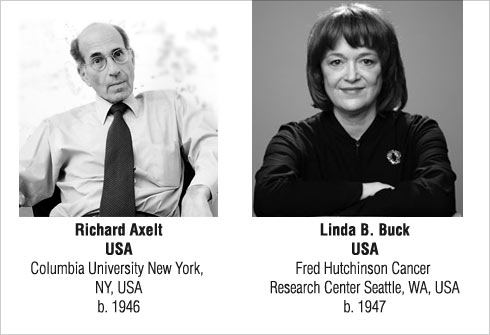 The Nobel Prize in Medicine 2004 "for their discoveries of odorant receptors and the organization of the olfactory system"
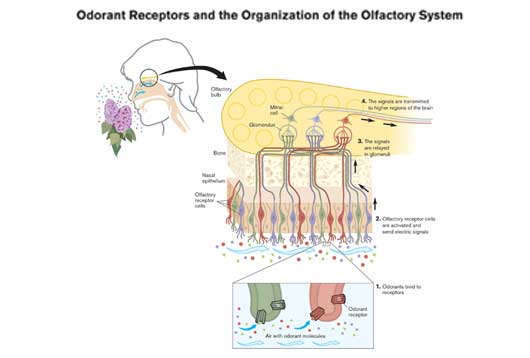 The basic principles for recognizing and remembering about 10,000 different odours were not understood. This year's Nobel Laureates have solved this problem and in a series of pioneering studies clarified how our olfactory system works.
They discovered a large gene family, comprised of some 1,000 different genes (three per cent of our genes) that give rise to an equivalent number of olfactory receptor types. These receptors are located on the olfactory receptor cells, which occupy a small area in the upper part of the nasal epithelium and detect the inhaled odorant molecules.
The basic principles for recognizing and remembering about 10,000 different odours were not understood. This year's Nobel Laureates have solved this problem and in a series of pioneering studies clarified how our olfactory system works.
They discovered a large gene family, comprised of some 1,000 different genes (three per cent of our genes) that give rise to an equivalent number of olfactory receptor types. These receptors are located on the olfactory receptor cells, which occupy a small area in the upper part of the nasal epithelium and detect the inhaled odorant molecules.
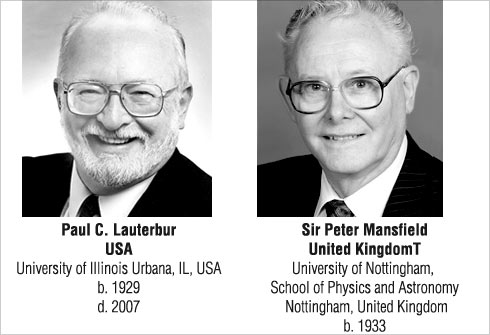 The Nobel Prize in Medicine 2003for their discoveries concerning magnetic resonance imaging"
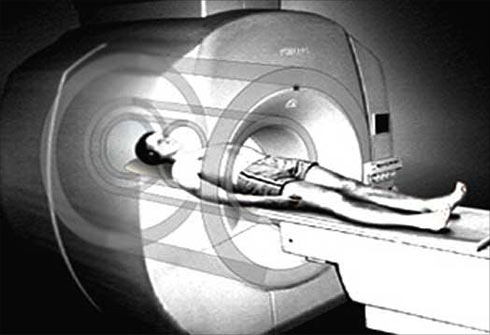 Paul Lauterbur discovered the possibility to create a two-dimensional picture by introducing gradients in the magnetic field.
Peter Mansfield further developed the utilization of gradients in the magnetic field. He showed how the signals could be mathematically analysed, which made it possible to develop a useful imaging technique. Mansfield also showed how extremely fast imaging could be achievable.
Paul Lauterbur discovered the possibility to create a two-dimensional picture by introducing gradients in the magnetic field.
Peter Mansfield further developed the utilization of gradients in the magnetic field. He showed how the signals could be mathematically analysed, which made it possible to develop a useful imaging technique. Mansfield also showed how extremely fast imaging could be achievable.
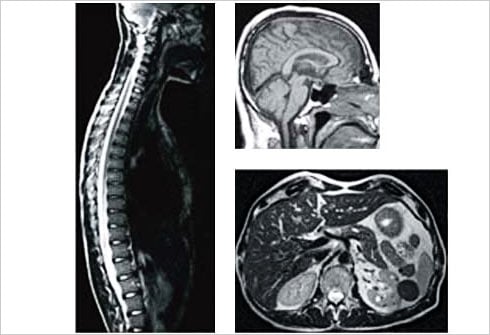 Today, MRI is used to examine almost all organs of the body. The technique is especially valuable for detailed imaging of the brain and the spinal cord.
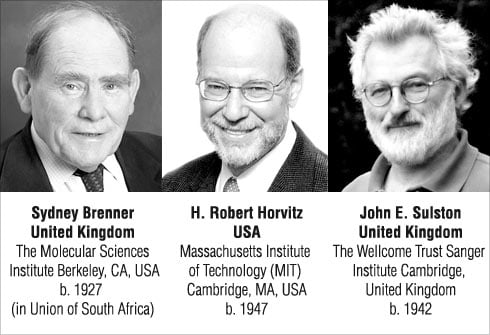 The Nobel Prize in Medicine 2002"for their discoveries concerning 'genetic regulation of organ development and programmed cell death'"
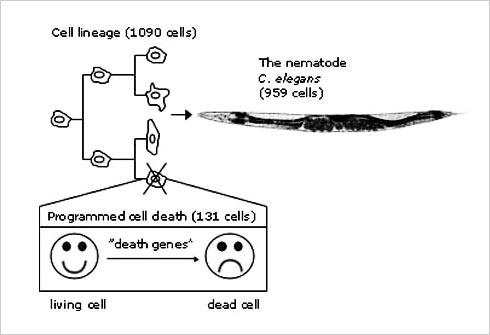
 Using the nematode C. elegans this year's Nobel Laureates have demonstrated how organ development and programmed cell death are genetically regulated. They have identified key genes regulating programmed cell death and demonstrated that corresponding genes exist also in higher animals, including man.
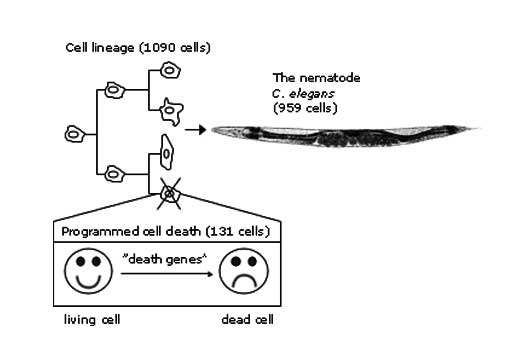
The figure schematically illustrates the cell lineage (top left) and the programmed cell death (below) in C. elegans. The fertilized egg cell undergoes a series of cell divisions leading to cell differentiation and cell specialization, eventually producing the adult organism (top right).
In C. elegans, all cell divisions and differentiations are invariant, i.e. identical from individual to individual, which made it possible to construct a cell lineage for all cell divisions. During development, 1090 cells are generated, but precisely 131 of these cells are eliminated by programmed cell death. This results in an adult nematode (the hermaphrodite), composed of 959 somatic cells.
Using the nematode C. elegans this year's Nobel Laureates have demonstrated how organ development and programmed cell death are genetically regulated. They have identified key genes regulating programmed cell death and demonstrated that corresponding genes exist also in higher animals, including man.
The figure schematically illustrates the cell lineage (top left) and the programmed cell death (below) in C. elegans. The fertilized egg cell undergoes a series of cell divisions leading to cell differentiation and cell specialization, eventually producing the adult organism (top right).
In C. elegans, all cell divisions and differentiations are invariant, i.e. identical from individual to individual, which made it possible to construct a cell lineage for all cell divisions. During development, 1090 cells are generated, but precisely 131 of these cells are eliminated by programmed cell death. This results in an adult nematode (the hermaphrodite), composed of 959 somatic cells.
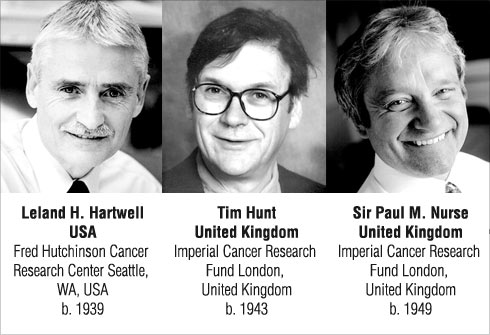 The Nobel Prize in Medicine 2001"for their discoveries of key regulators of the cell cycle"
 Nobel Laureates have made seminal discoveries concerning the control of the cell cycle. They have identified key molecules that regulate the cell cycle in all eukaryotic organisms, including yeasts, plants, animals and human.
CDK-molecules and cyclins drive the cell from one phase to the next. The CDK-molecules can be compared with an engine and the cyclins with a gear box controlling whether the engine will run in the idling state or drive the cell forward in the cell cycle.
The different phases of the cell cycle. In the first phase (G1) the cell grows. When it has reached a certain size it enters the phase of DNA-synthesis (S) where the chromosomes are duplicated. During the next phase (G2) the cell prepares itself for division. During mitosis (M) the chromosomes are separated and segregated to the daughter cells, which thereby get exactly the same chromosome set up. The cells are then back in G1 and the cell cycle is completed.
Nobel Laureates have made seminal discoveries concerning the control of the cell cycle. They have identified key molecules that regulate the cell cycle in all eukaryotic organisms, including yeasts, plants, animals and human.
CDK-molecules and cyclins drive the cell from one phase to the next. The CDK-molecules can be compared with an engine and the cyclins with a gear box controlling whether the engine will run in the idling state or drive the cell forward in the cell cycle.
The different phases of the cell cycle. In the first phase (G1) the cell grows. When it has reached a certain size it enters the phase of DNA-synthesis (S) where the chromosomes are duplicated. During the next phase (G2) the cell prepares itself for division. During mitosis (M) the chromosomes are separated and segregated to the daughter cells, which thereby get exactly the same chromosome set up. The cells are then back in G1 and the cell cycle is completed.
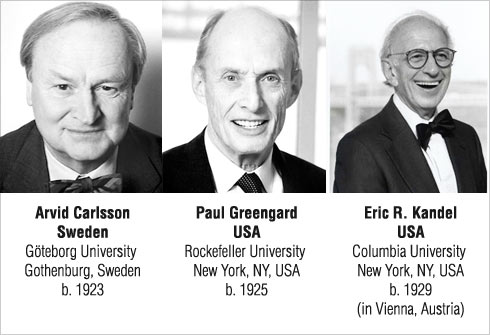 The Nobel Prize in Medicine 2000"for their discoveries concerning signal transduction in the nervous system"
 The three Nobel Laureates in Physiology or Medicine have made pioneering discoveries concerning one type of signal transduction between nerve cells, referred to as slow synaptic transmission.
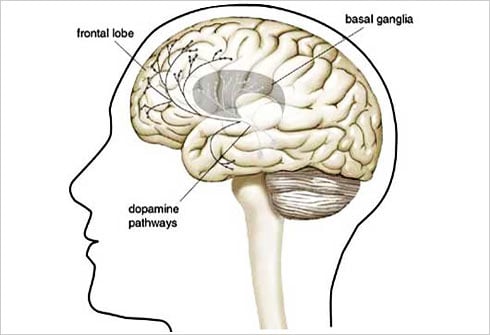
Dopamine nerve pathways in the brain: Arvid Carlsson showed that there were particularly high levels of the chemical transmitter dopamine in the so called basal ganglia of the brain, which are of major importance for instance for the control of our muscle movements.
In Parkinson's disease those dopamine producing nerve cells whose nerve fibers project to the basal ganglia die. This causes symptoms such as tremor, muscle rigidity and a decreased ability to move about.
The three Nobel Laureates in Physiology or Medicine have made pioneering discoveries concerning one type of signal transduction between nerve cells, referred to as slow synaptic transmission.
Dopamine nerve pathways in the brain: Arvid Carlsson showed that there were particularly high levels of the chemical transmitter dopamine in the so called basal ganglia of the brain, which are of major importance for instance for the control of our muscle movements.
In Parkinson's disease those dopamine producing nerve cells whose nerve fibers project to the basal ganglia die. This causes symptoms such as tremor, muscle rigidity and a decreased ability to move about.
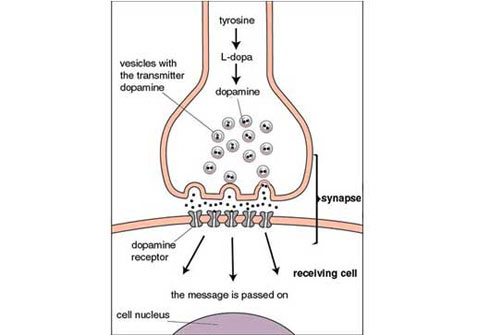 A message from one nerve cell to another is transmitted with the help of different chemical transmitters. This occurs at specific points of contact, synapses, between the nerve cells. The chemical transmitter dopamine is formed from the precursors tyrosine and L-dopa and is stored in vesicles in the nerve endings.
When a nerve impulse causes the vesicles to empty, dopamine receptors in the membrane of the receiving cell are influenced such that the message is carried further into the cell. In the treatment of Parkinson's disease, the drug L-dopa is given, and is converted to dopamine in the brain. This compensates for the patient's lack of dopamine.
A message from one nerve cell to another is transmitted with the help of different chemical transmitters. This occurs at specific points of contact, synapses, between the nerve cells. The chemical transmitter dopamine is formed from the precursors tyrosine and L-dopa and is stored in vesicles in the nerve endings.
When a nerve impulse causes the vesicles to empty, dopamine receptors in the membrane of the receiving cell are influenced such that the message is carried further into the cell. In the treatment of Parkinson's disease, the drug L-dopa is given, and is converted to dopamine in the brain. This compensates for the patient's lack of dopamine.
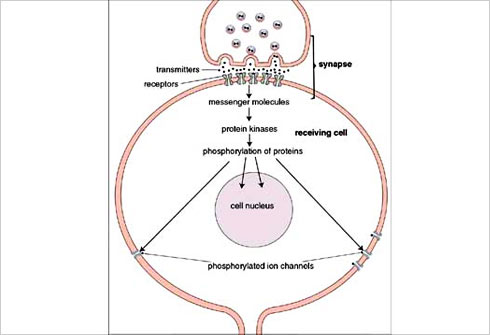 Paul Greengard has shown how dopamine and several other chemical transmitters exert their effects in the nerve cell.
When receptors in the cell membrane are influenced by a chemical transmitter, the levels of for example the messenger molecule cAMP are elevated. This activates so called protein kinases, which cause certain "key proteins" to become phosphorylated, that is phosphate molecules are added. These protein phosphorylations lead to changes of a number of proteins with different functions in the cell. When for instance proteins in ion channels in the cell membrane are influenced, the excitability of a nerve cell and its ability to send impulses along its branches changes.
Paul Greengard has shown how dopamine and several other chemical transmitters exert their effects in the nerve cell.
When receptors in the cell membrane are influenced by a chemical transmitter, the levels of for example the messenger molecule cAMP are elevated. This activates so called protein kinases, which cause certain "key proteins" to become phosphorylated, that is phosphate molecules are added. These protein phosphorylations lead to changes of a number of proteins with different functions in the cell. When for instance proteins in ion channels in the cell membrane are influenced, the excitability of a nerve cell and its ability to send impulses along its branches changes.
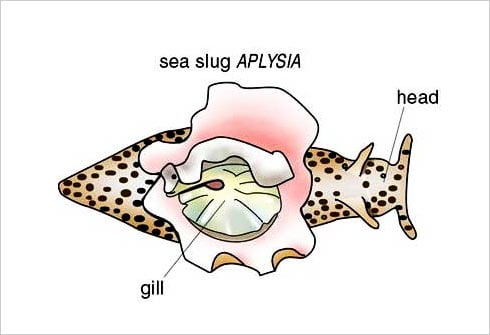 A sea slug, Aplysia, has a simple nervous system and a gill withdrawal reflex that Eric Kandel has utilized to study learning and memory.
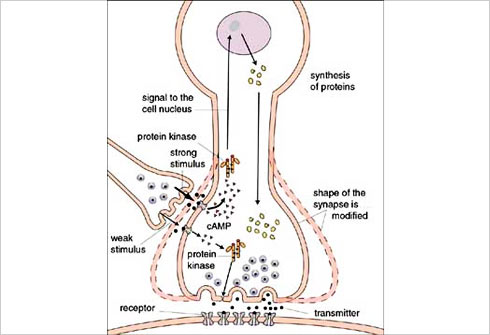 A schematic description of how molecular changes in a synapse may produce "short term memory" and "long term memory" in the sea slug, Aplysia. The figure shows a synapse that is affecting another synapse.
Short term memory can be produced when a weak stimulus (thin arrows in the left lower part of the figure) is causing a protein phosphorylation of ion channels, which leads to a release of an increased amount of transmitter.
For a long term memory to be created, a stronger and more long-lasting stimulus is required (bold arrows in the figure). This causes an increased level of the messenger molecule cAMP, which causes further activation of protein kinases. They will phosphorylate different proteins and affect the cell nucleus, which in turn will issue orders regarding the synthesis of new proteins. This may lead to changes in the form and function of the synapse. The efficacy of the synapse can then be increased and more transmitter released.
A schematic description of how molecular changes in a synapse may produce "short term memory" and "long term memory" in the sea slug, Aplysia. The figure shows a synapse that is affecting another synapse.
Short term memory can be produced when a weak stimulus (thin arrows in the left lower part of the figure) is causing a protein phosphorylation of ion channels, which leads to a release of an increased amount of transmitter.
For a long term memory to be created, a stronger and more long-lasting stimulus is required (bold arrows in the figure). This causes an increased level of the messenger molecule cAMP, which causes further activation of protein kinases. They will phosphorylate different proteins and affect the cell nucleus, which in turn will issue orders regarding the synthesis of new proteins. This may lead to changes in the form and function of the synapse. The efficacy of the synapse can then be increased and more transmitter released.
Latest Nobel Prize News
More News >>
- Video Animation
- Slideshows
- Videos
- Infographics
-
 Angioplasty
-
 Cardiopulmonary Resuscitation
-
 Heart Attack
-
 Coronary Artery Bypass Surgery
-
 Mitral Valve Disease and Replacement
-
 Atrial Septal Defect
-
 Ventricular Septal Defect
-
 Active Heart
-
 Patent Ductus Arteriosus
-
 Blood Pressure
-
 Learn How to Count Your Pulse
-
 Angioplasty - 3D
-
 How to know if someone is Breathing