- Levine MS, Glick SN, Rubesin SE, Laufer I. Double-Contrast Barium Enema Examination and Colorectal Cancer: A Plea for Radiologic Screening. Radiology 2002; 222:313–315.
- Glick S. Double-Contrast Barium Enema for Colorectal Cancer Screening: A Review of the Issues and a Comparison with Other Screening Alternatives. AJR 2000; 174: 1529-37.
What is Double-contrast Barium Enema?
Double-contrast barium enema is a radiological technique that can be used to screen individuals for colorectal cancer. It is preferred in individuals who cannot undergo colonoscopy or are at an increased risk of complications from colonoscopy.
Double-contrast barium enema, also called air-contrast barium enema. A number of other tests are also available to screen people for colorectal cancer; the details of these may be accessed at the link below:
Double-contrast barium enema is a radiological procedure where the inner lining of the colon is coated with radioactive barium. Films are then obtained that highlight the inner lining and assist in the detection of any abnormality.
Prior to the procedure, the patient has to undergo bowel preparation with laxatives. Diet is also restricted for 1 to 2 days prior to the procedure. This ensures that the inner lining is clearly visible on x-ray. Incomplete evacuation of the bowels could result in the presence of small masses in the colon, and thus interfere with the interpretation of the test.
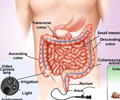
Following bowel preparation, the individual undergoing the test is made to lie down and an enema containing radioactive barium is administered. Subsequently, air is introduced through the anus through a thin tube. This ensures that the barium coats the inner lining of the colon. Images of the colon are obtained in the desired positions, which are then studied for any abnormalities.
Advertisement
Double-contrast barium enema should be repeated at least every 5 years.
1. Who should undergo double-contrast barium enema?
Double-contrast barium enema is one of the tests used in screening for colorectal cancer. Individuals over the age of 50 years at average risk for developing colorectal cancer should undergo any of the other screening tests on a regular basis. Double-contrast barium enema is especially preferred in individuals who cannot undergo procedures like colonoscopy or who are at an increased risk for complications if they undergo these procedures. A barium enema may be also required in patients who have undergone an incomplete sigmoidoscopy or colonoscopy.
2. How often should double-contrast barium enema be repeated?
If all findings are normal, double-contrast barium enema may be repeated every 5 years. People at high risk for developing colorectal cancer may have to start undergoing the test at an earlier age and repeat it more often.
3. Who should not undergo double-contrast barium enema?
Double-contrast barium enema is absolutely contraindicated during pregnancy due to the risk of radiation to the developing fetus. People with suspected perforation of the intestines, conditions that could lead to perforation such as severe ulcerative colitis or complete obstruction in the intestines should also avoid this test.
Advertisement
4. What are the advantages of double-contrast barium enema?
The advantages of Double-contrast barium enema are:
- The entire colon can be visualized during double-contrast barium enema
- The procedure permits visualization not only of the inner lining of the colon on x-ray, but also detects any abnormalities within the wall of the colon as well as in the abdomen
- It helps to differentiate colorectal cancer from other conditions affecting the colon like diverticulitis
- It is more cost-effective as compared to colonoscopy
- Unlike procedures like flexible sigmoidoscopy and colonoscopy, there is minimal risk of perforation with this procedure
5. What are the disadvantages of Double-contrast barium enema?
The disadvantages of Double-contrast barium enema are:
- The procedure exposes the person to radiation
- Bowel preparation with diet and laxatives is required prior to the procedure. This as well as the procedure itself may cause discomfort to the individual
- If the test detects any abnormality, the individual has to undergo a colonoscopy to obtain a biopsy and/or excise the lesion. Thus, doing two procedures instead of one increase the cost and inconvenience of the individual. This may be avoided in case a colonoscopy is done as the first choice
- The test may diagnose cancer in cases where it may not be present, resulting in unwanted anxiety in the individual. This could occur in case the radiologist is not experienced in interpreting the x-rays or if normal conditions like contractions or small fecal masses give the impression of a cancer
- Severe allergic reactions could rarely occur in patients allergic to barium
Frequently Asked Questions
1. Which doctor should I visit to get a double-contrast barium enema done?
You should visit your health care provider if you are interested in getting a Double-contrast barium enema done. He will refer you to a radiological center that carries out this test.
Advertisement
2. What is the difference between single contrast and double-contrast barium enema?
Single contrast barium enema is a procedure where only a barium enema is administered to the patient and the images thus obtained studied. In double-contrast barium enema, following the barium enema, air is introduced through the anus. This causes the barium to coat the lining of the colon in a single layer and allows better visualization of any abnormalities in the wall of the colon.
3. How long will the procedure take?
It may take from 1 to 2 hours to do the procedure.
4. Is the procedure likely to cause pain?
The procedure is not painful but may cause some degree of discomfort You will have a digital rectal examination followed by insertion of a soft tube in your rectum.